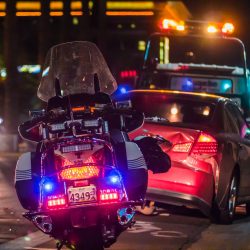
Tampa Car Accident Layer can help evaluate fault in Tampa parking lot accidents, which usually depends on right-of-way, duty to yield, vehicle movement, and the evidence showing how the low-speed collision occurred. Backing drivers generally must yield to vehicles in travel lanes, but aisle drivers still must use reasonable care. Shared fault may apply if both drivers acted carelessly. Photos, witness statements, surveillance footage, damage location, markings, and signage can shape the claim. The sections below explain how these disputes are commonly evaluated.
Main Takeaways
- Fault often depends on who had the duty to yield when the parking lot collision occurred.
- Backing drivers usually must yield to vehicles already traveling in the parking aisle.
- Shared fault may apply if both drivers were moving, speeding, distracted, or ignoring markings.
- Photos, witness statements, damage location, surveillance video, and signage help reconstruct low-speed crashes.
- Legal guidance may help when insurers dispute fault, minimize injuries, or delay payment.
Who Is Usually at Fault in Parking Lot Accidents?
Many parking lot accidents turn on which driver had the duty to yield at the moment of impact. Fault often falls on the driver backing out without ensuring the lane was clear, the driver cutting across marked spaces, or the driver moving too fast for a crowded area.
A vehicle already traveling in a lane is commonly treated as having a stronger position than one entering from a space, but every case depends on visibility, speed, signals, and attentiveness.
Comparative negligence may also apply when both motorists contributed to the collision, such as when one driver reversed carelessly while another failed to watch the path ahead.
Insurers examine witness statements, damage location, photos, store surveillance, and dashboard footage to reconstruct what happened.
For injured people seeking fair treatment, prompt documentation matters.
Careful legal review can identify all responsible parties and challenge assumptions that unfairly shift blame after a low-speed crash.
Florida Parking Lot Right-of-Way Rules
Florida parking lot right-of-way often turns on marked lanes, posted signs, and the movement of each vehicle.
Drivers backing out of spaces generally must yield to vehicles traveling in the lane.
Motorists must also watch for and yield to pedestrians in marked crosswalks, as failure to do so can strongly affect fault.
Marked Lanes And Signs
In parking lots, marked lanes, arrows, stop bars, yield signs, and posted traffic-control signs often provide the clearest evidence of who had the right of way. Within parking lot boundaries, drivers are expected to follow directional markings and obey visible controls as a reasonable person would on a public roadway. Sign compliance can show care; ignoring signs can support a finding of negligence.
Fault analysis may include photographs, surveillance video, witness statements, and maintenance records showing whether markings were clear, faded, blocked, or confusing. A driver proceeding with the indicated traffic flow generally has a stronger position than one cutting across lanes or disregarding a stop line. Careful review helps protect injured people, promote accountability, and encourage safer shared spaces for customers, employees, and visitors.
Backing Vehicles Must Yield
When a vehicle backs out of a parking space or driveway aisle, the reversing driver generally must yield to vehicles and pedestrians already moving through the lane of travel.
Florida fault analysis often focuses on whether the backing driver checked mirrors, looked over the shoulder, used reasonable caution, and stopped when danger became apparent.
A moving driver still has a duty to watch for hazards, maintain a safe speed, and avoid a preventable impact.
Under comparative negligence, fault may be divided if both drivers contributed to the collision.
Evidence can be decisive.
Skid marks, vehicle resting positions, damage patterns, witness accounts, and surveillance video may show who entered the travel lane first and whether either driver had time to yield, brake, and swerve away safely.
Pedestrians In Crosswalks
Although parking lots often feel informal, drivers must still yield to pedestrians lawfully using marked crosswalks and exercise reasonable care in areas where foot traffic is expected.
Pedestrian crosswalks near storefronts, medical offices, schools, and apartment complexes require heightened attention because vulnerable people may move slowly, carry items, or assist others.
In Florida fault analysis, a driver who enters a crosswalk without stopping, speeds through travel lanes, or fails to scan around parked vehicles may bear liability.
Driver visibility is also important; poor lighting, large vehicles, landscaping, or weather may affect what could reasonably be seen.
Still, limited visibility does not excuse careless driving.
Evidence such as surveillance video, witness accounts, lighting conditions, and vehicle position helps determine whether the driver acted responsibly and protected pedestrian safety.
Common Fault Scenarios in Parking Lot Crashes
Common parking lot crash disputes in Tampa often involve backing-out collisions, contested right-of-way, and impacts with pedestrians or shopping carts.
Fault may depend on visibility, driver movement, lane position, posted signs, and whether a pedestrian had a lawful path of travel.
Careful documentation of these facts can help injured parties challenge blame and support a stronger claim.
Backing Out Collisions
Because drivers backing out of parking spaces have limited visibility, they are often expected to yield to vehicles already traveling through the parking lane.
Fault may turn on whether the reversing driver checked mirrors, used a backup camera, paused before entering the lane, and proceeded slowly.
However, the analysis should also consider whether the other driver was speeding, distracted, or failed to use reasonable caution in a congested lot.
Surveillance video can clarify vehicle movement, brake lights, and timing.
Witness statements may also help establish whether a horn sounded, a driver stopped, or a vehicle suddenly accelerated.
In Tampa parking lot claims, careful evidence preservation supports fair outcomes and helps protect injured people seeking accountability, practical guidance, and respectful resolution after a preventable low-speed collision.
Right-Of-Way Disputes
Backing collisions are only one source of parking lot fault disputes; many Tampa crashes arise when drivers disagree about who had the right-of-way in travel lanes, at intersections between aisles, or near lot entrances and exits. Even minor fender benders can involve disputed signs, faded arrows, speed, and lookout duties. Florida’s comparative fault rules may assign shared responsibility when both drivers failed to yield or proceeded carelessly.
| Situation | Vital proof | Fault issue |
|---|---|---|
| Main lane vs. aisle | Photos, layout | Who should yield |
| Unmarked intersection | Witness statements | Reasonable caution |
| Entrance/exit conflict | Video, damage | Safe merging |
A careful claim review considers traffic controls, vehicle positions, impact points, and whether each driver acted with patience toward others using the lot.
Pedestrian And Cart Impacts
A parking lot crash involving a pedestrian or shopping cart often turns on visibility, speed, and control. Drivers must watch for people walking between vehicles, children near storefronts, and carts left in travel lanes.
Pedestrians also have duties to stay alert and avoid sudden movements into a vehicle’s path. Fault may rest with a driver who backs without checking mirrors, a shopper who releases an unsecured cart, or a store that fails to manage cart corrals and pedestrian flow.
Surveillance video can clarify timing, sightlines, and whether a driver had enough opportunity to stop. Witness statements may confirm warnings, horn use, or distracted behavior.
Careful evidence review helps protect injured people and ensures responsibility is assigned fairly under Florida negligence principles in each case.
What If Both Drivers Were Moving?
Two moving vehicles can make fault in a Tampa parking lot crash harder to determine, especially when one driver is backing out while another is traveling through the aisle. Comparative negligence, shared fault, may apply when both drivers had duties to look, yield, and proceed cautiously.
| Situation | Fault Consideration |
|---|---|
| Backing from a space | Must yield to aisle traffic |
| Driving down aisle | Must watch for reversing vehicles |
| Both speeding | Responsibility may be divided |
| Limited visibility | Extra caution is expected |
A driver backing out is often scrutinized because that vehicle enters a travel path. However, the aisle driver is not excused from care, particularly in crowded lots near stores, clinics, schools, or churches where people serve families and vulnerable visitors. If both drivers failed to act reasonably, each may bear a percentage of fault. That percentage can affect compensation, making early legal guidance important before statements or insurer conclusions shape the claim.
Evidence That Shows Who Was at Fault
When fault is disputed after a Tampa parking lot accident, evidence often determines whether one driver, both drivers, or another party bears responsibility. Important proof may include vehicle positions, skid marks, debris patterns, damage location, painted arrows, stop signs, lighting conditions, and nearby surveillance cameras. Dashcam footage can be especially helpful because it may show speed, direction of travel, backing movements, and whether a driver failed to yield.
Witness statements also matter, particularly when they come from neutral shoppers, employees, security personnel, or bystanders who saw the collision unfold. Their observations can help clarify whether a driver ignored traffic markings, reversed without checking, cut across spaces, or drove too fast for the setting.
Prompt documentation supports a fair fault determination. Photos should capture the broader parking lot layout, not just vehicle damage. A careful review of all available evidence helps protect injured people and promotes accountability for unsafe conduct.
How Insurance Handles Tampa Parking Lot Claims
Insurance companies often treat Tampa parking lot claims as fact-intensive disputes because low-speed collisions can still involve unclear right-of-way issues, backing movements, shared fault, and conflicting driver accounts.
Adjusters typically review photographs, vehicle damage, witness statements, police or incident reports, and any available surveillance video before adjusting fault determination. Even minor impact claims may require careful analysis of Florida traffic duties, property layout, and whether each driver used reasonable care.
Insurance claim timelines can vary depending on how quickly evidence is gathered, whether liability is contested, and whether injuries or property damage require further documentation.
Claimants are generally expected to report the crash promptly, cooperate with reasonable information requests, and avoid speculative statements that may be used against them.
A fair review should account for comparative fault, not assumptions based solely on impact location. Clear records, consistent descriptions, and organized supporting materials help insurers evaluate responsibility while protecting the claimant’s ability to serve family, work, and community needs.
When to Call a Tampa Parking Lot Lawyer
A disputed claim may call for legal guidance once the insurer questions fault, delays payment, minimizes injuries, or pressures a claimant to give a recorded statement before the facts are fully developed. In Tampa parking lot collisions, counsel can assess duties, comparative fault, and available coverage while protecting the injured person’s ability to recover.
| Concern | Why It Matters | Lawyer’s Role |
|---|---|---|
| Unclear right-of-way | Fault may be shared | Analyze traffic flow |
| Missing video | Evidence may vanish | Demand evidence preservation |
| Injury dispute | Low speed is often minimized | Document medical proof |
| Service vehicle involved | Employer coverage may apply | Identify liable parties |
When to consult becomes urgent if witnesses are leaving, surveillance loops are short, or a business controls critical records. A lawyer can send preservation letters, coordinate with medical providers, and negotiate without exposing the claimant to unfair admissions. Early action helps serve truth, accountability, and practical recovery.
—————————
Determining fault in Tampa parking lot accidents depends on right-of-way, driver movement, signage, visibility, and available evidence. Even low-speed collisions can create disputes, injuries, and insurance complications. Florida’s comparative fault rules may affect compensation when both drivers share blame. Tampa Car Accident Layer can evaluate reports, video footage, witness accounts, and insurer positions to protect the injured party’s claim. Prompt legal guidance helps preserve evidence and pursue fair recovery after a parking lot crash.