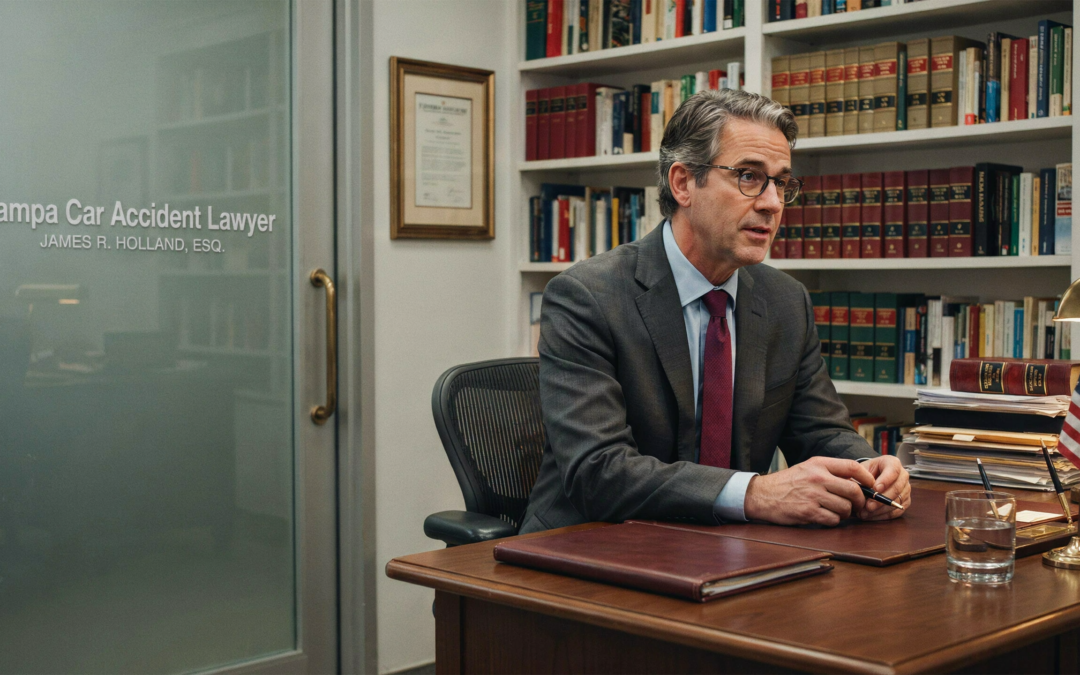
When another driver changes their account, clear, timely documentation can help insurers understand what happened without relying solely on conflicting recollections.
After addressing injuries and immediate hazards, document the event, preserve original photos and dashcam footage, gather witness details, and request the police report. Keep evidence organized and correct factual errors in writing.
If liability or injuries are disputed, Tampa Car Accident Lawyer services from The Law Offices of Anidjar and Levine may help protect your options; the steps ahead explain how to build a reliable record.
Main Takeaways
- Record each person’s account promptly, including when it was given, who heard it, and what was said.
- Preserve original photos, dashcam footage, messages, and other relevant records; back them up without altering them.
- Note changes in the other driver’s account calmly, preserve related messages, and identify witnesses who heard each version.
- Compare accounts with timelines and physical evidence, distinguishing direct observations from assumptions or uncertain details.
- Share relevant documentation with the responding officer, insurer, or legal representative, and keep organized copies for your records.
What to Do First After a Crash
After a crash, safety comes before documentation. First, check for injuries, including those that may not be immediately obvious. Anyone who is hurt, dizzy, confused, or in pain should receive prompt medical attention. A calm voice and a clear request for help can reassure shaken passengers while you contact emergency services.
If the vehicles create danger, move to safety when possible without worsening an injury. People should stay clear of traffic, fire, leaking fuel, and other hazards. If someone may have a serious neck or back injury, they should remain still unless immediate danger makes movement necessary. Warning lights or flares may help alert approaching drivers, but only when they can be placed safely.
Once everyone is out of immediate danger, responders can take over. Following their instructions, sharing vital information, and offering practical support helps protect everyone involved. A measured response can reduce further harm and give injured people the attention they need.
Why Crash Documentation Matters When Stories Change
When accounts of a crash differ, clear documentation can help keep the facts from being lost in confusion or faulty recollection. A calm, organized record gives everyone involved a fairer chance to understand what happened, especially when stress makes details difficult to remember. It can also help protect someone from being judged solely on another person’s changing account.
Written notes made soon after the collision can preserve important details, including when events occurred, what each person said, and who witnessed the exchange. These recollection timelines may help identify inconsistencies without turning uncertainty into accusation. A careful credibility assessment should consider the full record, not just one statement or a person’s demeanor.
Accurate documentation can support insurers, legal representatives, and others working to resolve the matter responsibly. It may reduce repeated questioning and help prevent avoidable disputes. By recording facts respectfully and promptly, those involved can serve one another through a process that is clearer, more balanced, and less burdensome during an already difficult time.
Photograph the Scene and Vehicle Damage
A written record can preserve recollections, while photographs capture details that may quickly change. After a collision, images can help clarify how events unfolded when accounts later differ. If it is safe, photograph the vehicles from several angles, including close-up views of dents, broken lights, paint transfer, and other visible damage. Wider shots can show vehicle positions, skid marks, traffic signals, and the surrounding roadway.
Photographs of Roadway debris, damaged barriers, or obstructed lanes may also preserve evidence that could soon be cleared. Images of weather conditions, lighting, and road surfaces can provide useful context without relying solely on memory. A calm, methodical approach helps protect an accurate record while respecting the stress and safety needs of everyone involved. No image is worth entering traffic or delaying urgent care. When possible, take photographs promptly and keep them in their original form. Careful documentation may help others understand the incident fairly and support a clearer review.
Record Driver, Vehicle, and Crash Details
Accurate driver and vehicle details can make later reviews more reliable, especially as memories fade. After a collision, each person involved may recall events differently, so clear notes can preserve what you knew at the time. Record the other driver’s full name, contact information, license number, and insurance provider and policy number, when available. This driver identification can help ensure later inquiries reach the correct person and that paperwork reflects the right parties.
Write down vehicle details, including make, model, color, license plate, and any visible damage. Note the time, date, and exact location of the crash, along with road, weather, and traffic conditions. Describe each vehicle’s direction of travel and the sequence of events in neutral, specific terms. Avoid guessing about fault or adding assumptions; distinguish observed facts from uncertain recollections. Careful documentation serves everyone involved by supporting accurate reviews, reducing confusion, and helping decision-makers understand the incident fairly.
Get Witness Names and Contact Details
Witnesses may remember details that drivers overlook or recall differently, so collecting their names and contact information soon after a crash can help preserve useful accounts. A calm, respectful request can make it easier for people to help while memories remain fresh. Bystander availability may change quickly as people leave for work, family, or other responsibilities, so contact details matter.
Prompt, respectful witness outreach can preserve fresh, useful accounts before bystanders leave or memories fade.
Useful details include:
- A full name, written clearly in a phone or notebook
- A working phone number or email address
- Where the person stood when the collision occurred
- What they noticed before, during, or after impact
- Whether they are willing to describe what they saw later
Do not coach or pressure a witness to agree with either driver. A brief, neutral note about their observations can help preserve context without shaping it. Witness credibility is supported by accurate identification and an account in the person’s own words, not by assumptions about whose version is correct. Treating witnesses with patience and gratitude respects their time and may help everyone involved reach a clearer understanding of the crash.
Request a Police Report After the Crash
After a crash, requesting the police report can help preserve an official account of the incident while details are still fresh. The report may record the responding officer’s observations, statements from drivers and witnesses, roadway conditions, and other relevant facts. If the other driver later describes events differently, this documentation can help clarify what was reported at the scene.
The injured person or an authorized representative can contact the responding agency to learn its Report request process, required forms, fees, and estimated processing time. Some departments provide online Records access; others require a written request or an in-person visit. Because procedures vary, checking the agency’s instructions can prevent delays.
Once received, review the report for errors or missing information. You may address an inaccurate detail through the agency’s correction procedure, though changes are not guaranteed. Keeping a copy with other claim documents can help insurers, legal representatives, and caregivers understand the incident and coordinate support for those affected.
Preserve Crash Evidence From Dashcams and Phones
Dashcam footage can capture details that may be hard to recall after a stressful crash, so save it promptly. Also preserve phone photos, videos, messages, and other relevant records without alteration. Keeping this evidence intact can help clarify what happened and support a more complete account.
Save Dashcam Footage
Crash footage can disappear quickly if a dashcam overwrites its memory card or a phone is damaged, lost, or reset. A careful driver can protect this evidence and help others understand what happened. After ensuring everyone is safe, the driver should:
- Stop recording before the camera loops over the collision.
- Remove the memory card and store it in a labeled, secure place.
- Save an unedited copy to Cloud storage, then verify it opens.
- Keep the original file to support Metadata preservation.
- Record the camera’s make, model, and the footage’s date and time.
The footage may show vehicle positions, signals, road conditions, or the moments before impact. Preserving it promptly can reduce uncertainty when accounts differ and spare injured people from relying on memory alone. Sharing copies with appropriate investigators or insurers can also help establish a clearer, fairer record.
Preserve Phone Evidence
A phone may hold photos, messages, location history, or call records that clarify what happened, but those details can be lost if the device is reset, damaged, or altered. After a crash, the owner should preserve relevant information without editing, deleting, or forwarding original files. A cloud backup can protect images if the phone is lost or damaged, while the original device should remain available when possible. Metadata preservation matters: timestamps and location data may help establish when and where events occurred. Screenshots can be useful, but they may omit details stored in original files, so save copies securely. If another person’s privacy is involved, limit access to appropriate parties. Careful preservation supports a fair review and helps those affected receive accurate, compassionate assistance.
Respond When the Other Driver Changes Their Story
When another driver changes their account, saved photos, messages, and witness details can help preserve what was first reported. The affected person should keep this evidence intact and note when and how the account changed. Reporting the change promptly creates a clearer record and can help prevent confusion later.
Preserve the Evidence
If the other driver later changes their account, clear documentation can help protect the facts from being disputed. Careful evidence retention and document preservation can support a fair understanding of what happened and help those affected avoid preventable confusion.
- Keep original photographs showing vehicle damage, road conditions, signs, and debris.
- Save messages, repair estimates, medical records, and receipts in one secure folder.
- Write a dated account while details remain fresh, separating observations from assumptions.
- Preserve dashcam footage and request nearby camera recordings before they are erased.
- Store witness names and contact details alongside notes about what each person observed.
These simple steps respect everyone involved by keeping reliable information available, rather than relying on memory alone. Back up copies, while keeping originals unchanged. Organized records can help insurers, advisers, and others assisting after the collision understand the circumstances and respond with care. A calm, consistent record may also reduce repeated questions for injured people and their families.
Report the Changed Account
Address a changed account promptly and calmly, not through confrontation. The injured person can notify the responding officer, insurer, or legal representative that the other driver’s description differs from what was initially reported. A brief, factual summary helps decision-makers understand the discrepancy without escalating tensions or assigning motives.
The person should record when and how the account changed, preserve relevant messages, and identify witnesses who heard either version. Consistent statements, supported by timely notes and available evidence, can help clarify what happened. If details are uncertain, describe them as uncertain rather than guessing. This careful approach protects the record and supports a fair review for everyone involved. It also helps address credibility concerns through documentation, not accusation, while allowing investigators to assess the facts objectively and respond appropriately to those affected.
Correct Errors in the Police Report
Even a seemingly minor error in a police crash report can affect how insurers assess a claim. An incorrect date, location, or vehicle description can create a confusing record when clear facts matter most. Anyone seeking a correction should act promptly and respectfully, recognizing that officers must follow established standards for factual corrections.
Minor crash report errors can complicate insurance claims, so request factual corrections promptly and respectfully.
The Report amendment process varies by agency, but typically begins with a written request identifying the report and the specific error. Supporting records can help clarify the facts without asking officers to change opinions or conclusions.
- A calendar showing the correct crash date
- A street sign confirming the location
- A registration document matching the vehicle
- A diagram marking the vehicles’ positions
- A witness statement correcting a name
The request should explain each discrepancy plainly and include copies, not irreplaceable originals. A calm, organized approach helps staff review the concern and serve everyone relying on an accurate account. If an agency declines to amend the report, its procedure may allow a supplemental statement or written explanation.
Send Crash Evidence to Your Insurer
Once the report’s facts are clear, sending relevant crash evidence to the insurer can help prevent misunderstandings and support a fair review. A timely Claim submission may include photographs, witness contact details, medical records, repair estimates, and the corrected report, when available. Each item can help clarify how the collision occurred and what losses followed, especially if another driver later changes their account.
Insurer communication should remain factual, respectful, and prompt. A concise explanation can identify what each document shows without guessing about fault or overstating injuries. If information is incomplete, the claimant can say so and provide updates as they become available. This approach helps claims staff assess the matter accurately and reduces the chance that important context is overlooked.
Careful sharing also serves everyone affected by the crash. Clear evidence can support a fair decision, ensure legitimate costs are considered, and make the process less stressful for families already coping with disruption. The claimant should follow the insurer’s instructions and keep copies of submitted materials.
Keep Your Crash Evidence Organized
Keeping crash evidence organized can ease an already stressful process and help prevent important details from being overlooked. Save photos and videos alongside police reports in clearly labeled files. Backing up these records protects them from loss and keeps them accessible when needed.
Save Photos and Videos
Clear photos and videos can preserve details that memory may blur after a stressful crash. A calm, thorough record can help others understand what happened and support a fair account when stories change. If it is safe, the people involved can capture:
- Vehicle positions, showing how cars came to rest.
- Damage from several angles, including close-ups and wider views.
- Skid marks, debris, and road conditions before they disappear.
- Traffic signs, signals, lane markings, and nearby landmarks.
- Short video of the scene, with surrounding sounds and visible conditions.
Save original files without editing; video metadata and photo timestamps may help establish when images were taken. Store copies in a clearly named folder and back them up securely. Avoid sharing images publicly or altering them, since doing so can complicate later review. Careful preservation respects everyone affected and keeps useful details available.
Organize Police Reports
A police report can preserve important crash details, but it is easier to use when stored with related records. After obtaining the report, the driver can note its report number, date, and issuing agency, then place it with photos, repair estimates, medical bills, and insurance correspondence. A clear label or simple index helps locate the right document when an insurer, attorney, or family member needs accurate information. Report filing may also include noting how and when the report was requested, especially if the official copy is delayed or corrected. Consistent records management reduces confusion and helps prevent important details from being overlooked as collision accounts change. Organized documentation supports a fair review and makes it easier for those assisting the driver to understand what happened and provide timely, informed help.
Back Up Your Records
Because crash records can be lost, damaged, or difficult to retrieve, drivers should keep backup copies of reports, photos, receipts, and correspondence. A simple system can protect details that may later help clarify what happened and support everyone seeking a fair resolution.
- Save police reports as scanned files and printed copies.
- Store scene photos in a dated folder, with brief captions.
- Keep medical bills and receipts jointly in a secure envelope.
- Add insurer emails and letters to a clearly labeled digital folder.
- Maintain repair estimate tracking, noting dates, updates, and payments.
A secure cloud account or external drive can preserve digital copies if a phone or computer fails. An Insurance policy review can help identify claim deadlines and required documents. Organized backups spare drivers and their families from searching under stress, and make it easier to share accurate information with insurers, repair professionals, or others assisting after a collision.
When to Get Legal Help With Conflicting Accounts
When drivers give conflicting accounts of a crash, even a well-documented scene may leave important questions unresolved. A changed statement, disputed traffic signal, or disagreement about injuries can complicate insurance discussions and delay fair decisions. In these moments, seeking guidance is not an act of hostility; it can help everyone involved understand the facts and protect their rights.
When to consult a crash attorney depends on the circumstances. Legal support may be useful when evidence is being overlooked, an insurer assigns blame without a clear basis, injuries are serious, or the other driver’s account shifts. A qualified attorney can review records, identify missing evidence, explain deadlines, and communicate with insurers while the injured person focuses on recovery and family responsibilities.
Legal advice for disputed liability can also clarify options before a person accepts a settlement or makes statements that may affect a claim. Early, informed help can reduce uncertainty and encourage a fair resolution grounded in reliable evidence.
Frequently Asked Questions
Can I Access Traffic Camera Footage After a Crash?
Yes, access may be possible, but policies vary by agency. Traffic camera footage retention is often brief, so a prompt public records footage request can help preserve evidence and support everyone affected by the crash.
How Long Do Insurance Companies Keep Crash Claim Records?
Insurance Claim Retention varies by company, claim type, and state law; records may remain available for several years. People seeking Crash Record Access should promptly request copies to help everyone involved preserve accurate information and support a fair resolution.
Can a Passenger File a Separate Injury Claim?
Yes, a passenger can file a separate injury claim against an at-fault driver, even when others pursue claims. Passenger Injury Claims may involve distinct losses; Independent Legal Representation helps protect the passenger’s interests and support recovery.
Does a Minor Crash Need to Be Reported to the DMV?
A minor crash may still require a DMV report; requirements vary by state, damage, injuries, and circumstances. Checking state crash reporting rules and DMV reporting deadlines helps drivers protect everyone involved and avoid penalties.
Can I Choose My Own Repair Shop After a Crash?
Yes, drivers can generally choose their own repair shop after a crash. Repair Shop Choice may depend on state law and policy terms; Insurance Network Estimates can help compare costs while supporting a trusted local business.
—————————
Conflicting accounts can make a crash feel even more stressful, especially when the facts seem to shift after the scene. Clear, timely documentation helps preserve what happened and gives insurers or legal professionals information they can assess. Photos, witness details, accurate records, and organized evidence may strengthen a driver’s account, though no single item guarantees an outcome. When key facts remain disputed, Tampa Car Accident Lawyer guidance from The Law Offices of Anidjar and Levine can clarify next steps and protect the driver’s interests.
After a Tampa car accident, victims should check for injuries, call 911 when anyone is hurt or hazards exist, report the crash when required, and preserve evidence. Medical care matters, even for delayed symptoms, because Florida PIP benefits and injury claims depend on documentation. Fault, insurance coverage, uninsured drivers, damages, and claim timelines can all affect recovery. These FAQs from Tampa Car Accident Layer explain the main steps, common risks, and legal options victims often need to understand next.
Main Takeaways
- Call 911 after a Tampa crash if anyone is injured, trapped, impaired, fleeing, or if traffic hazards or major damage exist.
- Collect photos, witness contacts, driver information, insurance details, road conditions, and officer report information before leaving the scene.
- Seek medical care promptly, because adrenaline can hide concussions, soft-tissue injuries, internal trauma, or spinal problems.
- Florida no-fault rules usually require using PIP benefits first for covered medical bills and some lost wages.
- Keep records, notify insurers quickly, avoid admitting fault, and consider legal review for serious injuries or disputed liability.
What Should You Do Right After a Crash?
What should someone do in the first moments after a Tampa car crash? The priority is calm, careful action that protects everyone involved. A driver should stop, check surroundings, and assess Scene Safety before leaving the vehicle.
If staying inside is safer because of traffic, smoke, or unstable debris, that choice may prevent further harm. Hazard lights, cones, or flares can help warn approaching motorists when available.
Next, each person should be evaluated with a simple Medical Checklist: consciousness, breathing, bleeding, pain, dizziness, confusion, and ability to move without worsening injury.
Even those who feel “fine” should be observed, because shock can hide symptoms.
A compassionate bystander may help keep injured people still, warm, and reassured while avoiding unnecessary movement.
The driver should also exchange identification, insurance, and vehicle details, document visible damage, note witness information, and preserve photos, statements, and records for later insurance or legal review.
When Should You Call 911 in Tampa?
When should a person call 911 after a Tampa car accident? A call is appropriate whenever anyone appears injured, trapped, unconscious, confused, bleeding, or complaining of pain. Even symptoms that seem minor may signal a serious condition, especially for children, older adults, pedestrians, cyclists, or motorcyclists.
Call 911 after a Tampa crash when anyone appears hurt, trapped, confused, bleeding, or in pain.
A 911 emergency response is also necessary when vehicles block travel lanes, fuel is leaking, fire is possible, power lines are down, or debris creates Tampa safety hazards for others.
A person should also call 911 if a driver appears impaired, aggressive, uninsured, or attempts to leave the scene. Emergency dispatchers can send police, fire rescue, or medical personnel based on the facts provided.
Until help arrives, those at the scene should prioritize safety, move only if it is safe, and avoid placing themselves in danger. Prompt action protects victims, bystanders, and first responders while preserving order during a stressful situation.
How Do You Report a Tampa Car Accident?
After a Tampa car accident, reporting the crash properly can help protect everyone involved and create an official record.
Law enforcement should be contacted when injuries, significant damage, or other reportable circumstances are present.
If officers do not file a report at the scene, the drivers may need to submit a crash report through the appropriate Florida reporting process.
Calling Law Enforcement
Call 911 immediately if anyone is injured, traffic is blocked, a driver appears impaired, or the crash involves significant vehicle damage. In Tampa, 911 dispatch can send police, fire rescue, or medical help where it is needed most. Safety first means drivers should move to a secure area only if doing so is safe, turn on hazard lights, and avoid confrontation.
| Moment |
What to Share |
Why It Matters |
| Shock |
Location and lanes affected |
Protects strangers nearby |
| Fear |
Injuries and hazards |
Speeds compassionate aid |
| Confusion |
Vehicle descriptions |
Helps officers respond |
| Relief |
Emergency contact details |
Supports family notification |
The caller should provide basic information calmly: names, location, injuries, and visible dangers. Law enforcement can then secure the scene and guide next steps.
Filing Crash Reports
A Tampa car accident report typically begins with law enforcement at the scene, but a driver may need to file a report later if an officer does not investigate the crash.
Florida generally requires reporting when injuries, deaths, hit-and-run conduct, impaired driving, commercial vehicles, towing, or significant property damage are involved.
In Tampa, a person may contact the appropriate law enforcement agency or use approved digital report options when eligible.
Accurate names, insurance information, vehicle descriptions, location, time, weather, witness details, and photographs can support crash details accuracy.
A careful report helps medical providers, insurers, and legal professionals understand what happened and respond appropriately.
Anyone assisting an injured person should encourage prompt reporting while avoiding guesses, blame, or statements beyond known facts and documented observations.
What Evidence Should You Collect Before Leaving?
Before leaving the crash scene, a person should collect evidence that helps show what happened, who was involved, and how the collision caused damage or injuries. Careful preservation supports insurance claims, police follow-up, and fair accountability.
| Evidence |
What to Capture |
Why It Helps |
| Photo documentation |
Vehicles, plates, road signs |
Shows impact and location |
| Witness statements |
Names, contacts, brief accounts |
Confirms key facts |
| Driver details |
License, insurance, registration |
Identifies responsible parties |
| Scene conditions |
Traffic lights, weather, debris |
Explains contributing factors |
| Officer information |
Badge number, report details |
Supports later record requests |
A person should also note the time, direction of travel, lane positions, and any visible surveillance cameras nearby. If safe, preserving broken parts or damaged personal property may help connect the crash to specific losses. Calm, respectful evidence gathering serves everyone involved by protecting truth, reducing disputes, and helping the process move forward responsibly.
Should You See a Doctor After a Tampa Crash?
After a Tampa crash, medical evaluation is strongly recommended even when injuries seem minor or symptoms appear delayed. Shock, adrenaline, and confusion can mask pain, while soft-tissue injuries, concussions, internal trauma, and spinal problems may worsen over hours or days. Prompt care supports Delayed symptom recognition by allowing trained professionals to identify warning signs before complications develop.
A doctor’s exam also creates medical documentation, which records diagnoses, treatment plans, limitations, and the connection between the collision and reported injuries. This record can help caregivers, employers, attorneys, and other support professionals understand the victim’s needs with accuracy and compassion.
Victims should describe all symptoms, including headaches, dizziness, numbness, stiffness, anxiety, sleep changes, or reduced mobility.
Follow-up appointments, prescribed therapy, imaging, and referrals should be taken seriously. Consistent treatment protects health, promotes restoration, and helps those assisting the injured person respond with informed, practical support after a traumatic event.
How Does Florida No-Fault Insurance Work?
Florida’s no-fault system generally requires an injured person to first turn to Personal Injury Protection for certain covered accident expenses, regardless of who caused the crash.
This coverage can help with medical bills and lost wages, but strict limits and deadlines may affect available benefits.
A claim against the at-fault driver typically depends on meeting Florida’s lawsuit threshold requirements.
Personal Injury Protection
Often, one of the first questions after a Tampa car accident is who pays for medical treatment and lost wages. Florida’s no-fault system generally looks first to the injured person’s Personal Injury Protection, regardless of who caused the crash. Understanding PIP coverage details helps victims act quickly while preserving options for further recovery when injuries are serious.
| Key Point |
Practical Meaning |
| Required coverage |
Applies to insured motorists |
| No-fault structure |
Fault is not initially decisive |
| Prompt notice |
Delays can jeopardize benefits |
| Documentation |
Records support the claim |
| Legal review |
Counsel may identify next steps |
Basic claim filing steps include notifying the insurer, providing accident information, following policy deadlines, and keeping organized records. This process can help stabilize families while they focus on healing.
Covered Accident Expenses
Once a PIP claim is opened, the next concern is what accident-related costs the coverage may actually pay.
In Florida, Personal Injury Protection generally helps cover necessary medical bills arising from the crash, including emergency care, hospital treatment, follow-up visits, rehabilitation, and certain prescribed services.
Coverage may also apply to a portion of wage loss when injuries keep an insured person from working.
In limited circumstances, PIP can help with replacement services, such as vital household tasks the injured person cannot perform during recovery.
These benefits are paid regardless of who caused the accident, subject to policy limits, deductibles, and timely medical treatment requirements.
Careful documentation helps protect access to benefits and supports accurate claim evaluation by insurers, providers, and those assisting the injured.
Lawsuit Threshold Requirements
Some accident injuries may justify a claim outside the no-fault system when they meet Florida’s lawsuit threshold requirements. Typically, this means the victim suffered a significant and permanent loss, permanent injury within a reasonable degree of medical probability, significant scarring or disfigurement, or death.
When that threshold is met, the injured person may pursue damages not covered by personal injury protection, including pain and suffering.
In these cases, Negligence standards become important. The claimant must show another party failed to use reasonable care and that failure caused harm.
Florida’s comparative fault rule may reduce compensation if the injured person shares responsibility.
Careful documentation, medical evaluation, and timely guidance help protect the victim’s rights while supporting a fair, service-centered response to serious loss.
Who Pays Medical Bills After a Tampa Crash?
After a Tampa crash, medical bills are usually paid first through the injured person’s own personal injury protection insurance, commonly called PIP, regardless of who caused the collision. Florida PIP generally pays a portion of reasonable and necessary medical expenses, subject to policy limits and treatment deadlines.
Florida PIP is often the first source for crash-related medical bill payment, regardless of fault.
When bills exceed PIP benefits, other health coverage options may help reduce immediate financial strain.
Common payment sources may include:
- PIP benefits under the injured person’s auto policy
- Medical insurance, Medicare, Medicaid, or other health coverage options
- out of pocket payments when coverage is unavailable or exhausted
Providers may also use letters of protection, allowing treatment while payment is deferred until a claim resolves. This can help an injured person continue care without abandoning responsibilities to family, work, or community.
Careful billing records, explanation-of-benefits statements, and receipts should be preserved, because they help document losses and clarify reimbursement issues during the claim process.
How Is Fault Decided After a Tampa Car Accident?
How is responsibility decided after a Tampa car accident? Responsibility is determined through a careful review of evidence showing how the crash occurred and whether any driver failed to use reasonable care.
A fault investigation may include police reports, witness statements, vehicle damage, traffic camera footage, skid marks, medical records, and statements from the people involved.
Investigators may also examine whether a driver was speeding, distracted, impaired, following too closely, or violating traffic signals.
Florida’s comparative fault rules allow liability to be divided among more than one party. This means each driver may be assigned a percentage of fault based on the available evidence.
That determination can affect insurance coverage, claim value, and how losses are evaluated.
For injured people and those helping them recover, preserving evidence early is important. Clear documentation helps ensure the facts are understood, responsibilities are fairly assessed, and decisions are not based on assumptions or incomplete information.
When Can You Sue After a Tampa Car Accident?
Florida’s no-fault rules generally require injured people to first seek benefits through their own insurance after a Tampa car accident.
A lawsuit may be available when the crash causes a serious injury that meets Florida’s legal threshold.
Understanding that distinction can help accident victims assess their options with greater confidence.
Florida No-Fault Rules
When can an injured person step outside Florida’s no-fault system and file a lawsuit after a Tampa car accident?
Florida generally requires crash victims to first turn to their own PIP coverage, regardless of who caused the collision. This coverage helps pay medical bills and limited wage losses, but it does not always address the full impact on a person, family, or community.
Key no-fault points include:
- PIP applies before a fault-based claim is usually considered.
- Prompt medical care matters because Florida imposes treatment deadlines.
- Additional recovery may depend on facts beyond basic insurance benefits.
For those supporting an injured victim, understanding these rules can guide timely decisions.
Careful documentation, early medical attention, and legal guidance help protect available options.
Serious Injury Claims
A serious injury may allow a Tampa car accident victim to step outside Florida’s no-fault system and pursue a claim against the at-fault driver.
Florida law generally requires proof of a permanent injury, significant and permanent scarring or disfigurement, or death before non-economic damages, such as pain and suffering, may be sought.
Because this threshold is fact-specific, early medical documentation is necessary.
Treatment records, diagnostic imaging, physician opinions, and work restrictions can help show the injury’s severity and long-term impact.
Evidence preservation also matters; photos, crash reports, witness information, vehicle damage, and surveillance footage may support liability and damages.
For victims and families focused on recovery, prompt legal guidance can protect deadlines, organize proof, and help ensure accountable parties are pursued with care and purpose.
What Damages Can Tampa Crash Victims Claim?
After a serious Tampa car accident, injured victims may be able to claim damages for both financial losses and the personal impact of their injuries. These damages help restore stability, support recovery, and acknowledge the burdens placed on victims and their families.
Compensation can help victims recover financially while recognizing the lasting personal toll of a serious Tampa car accident.
Common recoverable damages may include:
- Medical expenses, including emergency care, surgery, rehabilitation, medication, and future treatment needs
- Lost Wages when injuries prevent a victim from working or reduce long-term earning ability
- Pain Suffering related to physical discomfort, emotional distress, trauma, and loss of daily enjoyment
The value of a claim depends on injury severity, medical evidence, work limitations, and how the crash affects the victim’s life. Caregivers, advocates, and legal professionals often help document these losses with compassion and accuracy.
A careful damages assessment can ensure that the claim reflects not only bills and receipts, but also the human cost of a preventable collision.
What If the At-Fault Driver Was Uninsured?
If the at-fault driver was uninsured, a Tampa crash victim may still have options for financial recovery through available insurance coverage and legal avenues.
Florida’s no-fault system generally allows injured people to turn first to their own personal injury protection benefits for medical expenses and lost income, regardless of fault.
When injuries exceed those benefits, Florida uninsured coverage may provide additional protection if the victim purchased it before the crash.
This coverage can help address medical costs, lost wages, and pain and suffering that the uninsured motorist cannot pay.
Reviewing the policy language is important, because limits, exclusions, and notice requirements can affect recovery.
Uninsured driver liability may also support a direct claim against the negligent driver, though collection can be difficult if that person lacks assets.
A Tampa car accident attorney can identify available coverage, document losses, communicate with insurers, and pursue every responsible source with care and diligence.
How Long Do Tampa Accident Claims Take?
Often, the time it takes to resolve a Tampa accident claim depends on the severity of the injuries, the clarity of fault, the available insurance coverage, and whether the insurer negotiates fairly. Simple claims may resolve in weeks, while cases involving serious medical treatment, disputed liability, or multiple policies may take months or longer.
Filing timelines also matter, because late or incomplete submissions can slow claim processing and reduce options.
Common factors affecting settlement length include:
- Completion of medical treatment or a reliable prognosis
- Prompt exchange of police reports, records, and documentation
- Insurance delays, including repeated requests, slow evaluations, or low offers
Victims often need time to understand the full impact of pain, lost income, caregiving burdens, and future needs.
A careful process can protect families from accepting less than the claim is worth. Patience, organized records, and steady communication generally help move the matter toward resolution.
When Should You Call a Tampa Car Accident Lawyer?
Soon after a Tampa car accident, a lawyer should be contacted when injuries are significant, fault is disputed, insurance adjusters request recorded statements, or settlement offers appear too low. Early guidance helps protect medical care, lost-wage documentation, vehicle damage records, and communications with insurers.
Early legal guidance after a Tampa crash helps protect evidence, claims, and communications with insurers.
Prompt legal help is especially important when a crash affects a family’s ability to work, provide care, or meet daily responsibilities.
When evidence disappears, such as skid marks, surveillance footage, witness memories, or damaged vehicles, proving what happened becomes harder. A lawyer can act quickly to preserve records, investigate liability, and identify all available insurance coverage.
Legal deadlines apply, and missing them can limit or end the right to compensation. Even when a claim seems straightforward, consultation may reveal issues involving comparative fault, uninsured drivers, future treatment, or long-term impairment.
Timely contact allows victims and their caregivers to make informed decisions while focusing on recovery and stability.
—————————
Car accidents in Tampa can leave victims facing medical concerns, insurance questions, lost income, and uncertainty about what comes next. Knowing when to call 911, how to report a crash, what evidence to preserve, and when to seek medical or legal help can protect both health and financial recovery. Each case is different, especially when serious injuries or uninsured drivers are involved. Prompt action and informed guidance from Tampa Car Accident Layer can help victims move forward with greater confidence.
Witness statements matter in Tampa car accident investigations because they preserve independent details before memories fade and evidence disappears. Neutral observers may identify speeding, unsafe lane changes, signal violations, vehicle positions, road hazards, lighting, or weather conditions. These accounts help police, insurers, Tampa Car Accident Lawyer, and attorneys compare photos, damage, medical timelines, videos, and reports. Reliable statements can clarify fault, causation, and damages when drivers disagree. The sections below explain how these statements are collected, tested, and used.
Main Takeaways
- Witness statements preserve important crash details before evidence disappears and memories fade.
- Neutral observers can clarify speed, lane changes, traffic signals, braking, and driver behavior.
- Statements help compare police reports, photos, vehicle damage, medical timelines, and video footage.
- Credible witnesses can support or challenge fault disputes in intersections, rear-end crashes, and lane-change collisions.
- Reliable accounts strengthen Tampa car accident claims by supporting negligence, causation, damages, and fair insurance decisions.
Why Witness Statements Matter After Tampa Crashes
After a Tampa car crash, witness statements can help secure what happened before evidence disappears or memories fade. Independent observers may note details that injured drivers, passengers, or responders cannot fully capture in the moment. Their accounts can preserve timing, traffic conditions, vehicle positions, lighting, road hazards, and the presence of Damaged property. Such information gives investigators a practical foundation for comparing photos, police reports, medical records, and repair documentation.
Witness credibility also matters because reliable statements can strengthen a claim and support fair decision-making. A careful account from someone with no personal stake may help confirm central facts and reduce uncertainty for insurers, attorneys, and courts. For those committed to serving injured people and their families, early witness identification is an important step. It protects the truth, promotes accountability, and helps secure that decisions rest on evidence rather than assumptions, confusion, or incomplete records after the crash.
What Witnesses Can Reveal About Fault
Once witness statements preserve the basic facts of a Tampa crash, they can also help identify which driver’s conduct caused or contributed to the collision. A neutral observer may describe speeding, sudden lane changes, distracted driving, failure to yield, or disregard of traffic signals. These details often clarify how vehicle positioning changed before impact and whether a driver had time to avoid harm.
Investigators assess Credibility factors such as the witness’s distance from the crash, lighting, distractions, consistency, and lack of personal interest. Strong scene observation can support or challenge physical evidence, including skid marks, debris fields, and points of impact.
Memory accuracy also matters; prompt statements tend to capture details before stress, conversations, or media reports reshape recollection.
For injured people and those assisting them, reliable witness accounts can promote accountability. They help insurers, attorneys, and courts evaluate fault through evidence rather than assumptions, supporting fair outcomes for everyone involved.
When Witness Statements Matter Most
Witness statements matter most when the available evidence leaves room for dispute about how a Tampa car accident occurred. They are especially important in intersection crashes, lane-change collisions, rear-end impacts with contested stopping behavior, pedestrian incidents, and crashes involving commercial vehicles.
Witness statements can clarify disputed Tampa crashes when physical evidence does not tell the full story.
In these situations, physical damage, police reports, and insurance accounts may not fully explain timing, speed, signals, or driver conduct.
Independent observers can help confirm whether a driver ran a red light, failed to yield, was distracted, or acted aggressively.
Their accounts may also clarify conditions affecting Tampa visibility, including rain, glare, poor lighting, construction zones, or obstructed views.
Eyewitness credibility becomes central when statements are consistent, specific, and supported by other evidence.
For injured people, families, first responders, attorneys, and insurers committed to fair outcomes, reliable witness information helps protect the truth.
It can prevent blame from shifting unfairly and support decisions grounded in facts, not assumptions, after a serious collision.
How To Collect Witness Statements Safely
Collecting witness statements should begin only after scene safety is secured and emergency needs are addressed.
Clear, neutral questions help preserve accurate observations without influencing the witness’s account.
Recording full contact details ensures investigators can verify and follow up on pivotal evidence later.
Prioritize Scene Safety
Before anyone tries to identify or speak with witnesses, the crash scene must be made as safe as possible. Safety preserves lives and protects evidence. A calm helper should move to a secure location, call 911, and avoid standing in traffic. Documenting injuries should occur only when it does not delay medical care.
| Risk |
Safe action |
Evidence value |
| Traffic |
Use shoulders, hazards |
Prevents added harm |
| Fire |
Keep distance |
Protects observers |
| Debris |
Avoid lanes |
Preserves scene |
If conditions permit, photo timestamping can record vehicle positions, skid marks, weather, and visible hazards before cleanup changes the scene. No witness account is worth a second collision. Responsible evidence gathering begins with protection, patience, and respect for emergency responders.
Ask Clear Questions
After the scene is secure, clear and neutral questions help preserve a witness’s independent memory. Open ended questions, such as asking what the witness saw or heard before impact, reduce the risk of suggesting answers.
A calm listener should avoid assumptions about speed, fault, distraction, or injury unless the witness raises those facts. Each response should be clarified with consistent follow up: where the witness stood, what direction each vehicle traveled, whether traffic signals were visible, and what occurred immediately after the collision.
Questions should be brief, respectful, and focused on observable facts, not opinions. This approach supports accurate investigation, protects vulnerable parties, and serves the broader goal of accountability.
Careful questioning can help Tampa crash victims, insurers, and investigators assess evidence with greater fairness.
How can a useful statement be verified later if the witness cannot be reached? After a Tampa crash, contact details turn a brief observation into reliable evidence. The collector should respectfully request the witness’s full name, phone number, email address, and preferred method of communication.
If appropriate, emergency contacts may help confirm identity or availability, but privacy should be respected and unnecessary details avoided.
Accurate records also require context. The collector should note conditions surrounding the exchange, including time, location, weather, lighting, traffic, and whether the witness appeared rushed, injured, or distressed.
These details help investigators evaluate reliability and follow up without confusion. Careful contact recording serves injured people, insurers, and legal teams by preserving access to facts that may clarify fault and support fair outcomes later.
What Details Should Witnesses Include?
A strong witness statement should record the exact time and location of the Tampa crash to anchor the account in verifiable facts. It should also identify driver behavior, vehicle details, and any visible damage that may help establish fault.
Road layout, traffic signals, weather, lighting, and surface conditions can further support a clear, evidence-based reconstruction.
Time And Location
When a witness describes a Tampa car accident, the exact time and location can help investigators verify what happened and connect the statement to objective evidence. Time details should be as specific as possible, including the hour, approximate minute, and whether the witness checked a phone, receipt, work clock, or nearby digital sign.
Accurate witness timelines allow investigators to compare accounts with 911 logs, traffic cameras, business surveillance, and weather data.
Location details should identify the street, intersection, lane area, direction of travel, and nearby scene landmarks such as storefronts, traffic signals, bus stops, parking lots, or mile markers.
These details help responders, insurers, and attorneys understand where the event unfolded and preserve evidence that may protect injured people and support a fair investigation.
Driver And Vehicle Details
Driver and vehicle details help investigators distinguish between involved parties, identify evasive drivers, and test each account against physical evidence.
Witnesses should note vehicle make, model, color, license plate, commercial markings, and any visible vehicle damage before or after impact.
Accurate descriptions of lane position, turn signals, speed impressions, and braking behavior can clarify whether a driver acted carefully or created danger.
Passenger observations also matter, including whether occupants appeared injured, distracted, arguing, or attempting to leave.
Details about the driver’s appearance, gestures, phone use, impairment signs, or statements at the scene may support or challenge later claims.
When witnesses provide these specifics promptly, they help protect injured people, guide fair accountability, and give investigators concrete facts rather than assumptions.
Such careful reporting serves justice and community safety.
Road And Weather Conditions
Beyond driver and vehicle details, road and weather conditions can explain why a collision occurred and whether a driver responded reasonably to known hazards.
Witnesses should note wet pavement, standing water, debris, potholes, lane markings, construction zones, malfunctioning signals, or missing signs.
Specific observations about visibility limits, fog, smoke, heavy traffic, or blocked sightlines help investigators evaluate reaction time and fault.
In Tampa, sudden storms make rainfall impact especially important, including hydroplaning risks and reduced braking distance.
At dusk or after dark, witnesses should describe night lighting, streetlamp outages, reflective signage, and whether headlights were visible.
On bridges and interstates, highway glare from sun, water, or oncoming vehicles may affect perception.
These details support fair claims decisions and help responsible parties serve injured people with greater accuracy.
What Makes A Witness Statement Believable?
A believable witness statement is specific, consistent, and grounded in what the person actually saw or heard at the crash scene. Investigators look for detailed recollections: vehicle positions, traffic signals, sounds of braking, impact sequence, and the timing of events. Vague guesses or conclusions carry less weight than observations tied to clear sensory details.
Credible demeanor also matters, but it is not judged by confidence alone. A careful witness may admit uncertainty, correct a prior detail, or explain limited visibility. Those qualities can strengthen reliability because they show restraint rather than exaggeration.
Consistency checks compare the statement with physical evidence, police reports, vehicle damage, medical records, and other accounts. When details align, the statement becomes more useful in identifying fault and protecting injured people.
An unbiased perspective is especially important. A witness with no personal stake, no relationship to the drivers, and no motive to shift blame offers evidence that can support fair outcomes.
How Tampa Roads Affect What Witnesses Saw
Because Tampa’s road network includes multi-lane arterials, interstate ramps, bridges, one-way streets, and congested intersections, a witness’s viewpoint can strongly affect what they perceived before and after a crash. Distance, angle, vehicle height, road signage visibility, lighting conditions, and traffic congestion patterns may shape whether a person noticed speed, lane position, braking, or how drivers react to sudden hazards. A pedestrian on Kennedy Boulevard may see signal timing; a rideshare passenger on I-275 may notice merging pressure; a cyclist near Bayshore may observe sightline limits.
| Road setting |
What may be seen |
Human impact |
| Bridge glare |
Delayed braking |
Families wait for answers |
| Ramp merge |
Sudden swerves |
Helpers seek truth |
| One-way street |
Wrong-way confusion |
Victims need clarity |
| Night intersection |
Faint signals |
Care feels urgent |
Careful evaluation connects each account to physical surroundings, helping responsible parties separate reliable observations from honest but limited impressions.
How Police Use Witness Statements In Reports
Police use witness statements to test driver accounts against independent observations. These statements can confirm or challenge claims about speed, signals, lane position, braking, and point of impact.
When recorded accurately, witness details help establish the crash sequence and strengthen the evidentiary value of the report.
Corroborating Driver Accounts
In a Tampa car accident investigation, witness statements help officers test each driver’s account against independent observations from the scene. When accounts conflict, officers compare what neutral bystanders noticed with recorded driver statements. This process supports fairness, protects injured people, and helps responders serve the community with accuracy.
| Review Focus |
Report Value |
| Eyewitness credibility |
Shows whether the observer was attentive, consistent, and unbiased |
| Streetlight visibility |
Helps explain what a witness could reasonably see |
| Nearby position |
Indicates whether the witness had a clear viewpoint |
| Timing of statement |
Reduces risk of memory changes or outside influence |
Establishing Crash Details
When officers document a Tampa car accident, witness statements help establish concrete crash details that may not be fully captured by driver accounts, vehicle damage, or roadway evidence alone.
Witnesses may identify vehicle positions, signal use, lane changes, speed impressions, traffic light status, weather conditions, and the sequence of impact.
These details allow police to compare independent observations with physical evidence and each driver’s explanation.
Eyewitness credibility is strengthened when the witness had a clear vantage point, remained attentive, and provided specific facts without exaggeration.
Statement consistency also matters; matching accounts from separate witnesses can support reliable findings in the crash report.
How Insurers Judge Tampa Accident Witnesses
How do insurers decide whether a Tampa accident witness is reliable? They compare the statement against physical evidence, police reports, vehicle damage, traffic-camera footage, weather data, and medical timelines. Consistency matters, but so does the witness’s position, lighting, distance, attention, and opportunity to observe the collision. A clear, prompt account usually carries more weight than a delayed or changing version.
Adjusters also consider relationships. A passenger, friend, employee, or hostile bystander may still tell the truth, yet insurers examine How Biases Influence memory, wording, and blame. Neutral witnesses with no financial or personal stake often receive stronger credibility, especially when their details match objective proof.
What Records Should be preserved? Names, phone numbers, addresses, recorded statements, dispatch logs, body-camera notes, photographs, and the exact location where each witness stood. These materials help insurers separate helpful recollection from speculation, supporting fair decisions for injured people, families, and others affected by the crash.
How Attorneys Use Witness Statements In Claims
After a Tampa crash, attorneys use witness statements to test liability theories, identify disputed facts, and connect the collision to documented injuries. They compare each account with police reports, photographs, vehicle damage, traffic controls, medical timelines, and available video. This comparison helps determine whether a statement supports negligence, causation, or damages in a claim.
Attorneys also evaluate witness reliability factors, including vantage point, lighting, distance, attention, timing, bias, and consistency with physical evidence. Through attorney credibility checks, they may confirm contact information, prior relationships, opportunity to observe, and whether the account changed over time. Reliable statements can strengthen demand packages, guide settlement negotiations, and prepare testimony if litigation becomes necessary.
Used carefully, witness evidence helps attorneys present a claim that is organized, truthful, and service-minded. It allows injured people to be heard through facts, not exaggeration, while giving insurers or jurors a clearer basis for fair accountability and restitution.
What To Do When Witnesses Disagree
Conflicting witness accounts do not automatically weaken a Tampa car accident claim; they create an evidence-resolution task. Investigators should separate observation from interpretation, noting what each witness saw, heard, and where they stood.
Small differences may reflect stress, obstructed views, weather, lighting, or Tampa traffic nuances such as sudden merges, signal timing, tourist confusion, or congestion near bridges and interchanges.
Credibility factors help determine which account carries greater weight. These include proximity to impact, line of sight, attention level, consistency, neutrality, and whether the statement matches photographs, vehicle damage, skid marks, dashcam footage, 911 calls, or police findings.
A careful attorney will not dismiss a witness because of disagreement; instead, the attorney compares accounts against objective proof and reconstructs the event.
This approach serves injured people by protecting truthful evidence, correcting mistaken assumptions, and presenting insurers or juries with a clear, fair explanation of how the crash occurred.
—————————
Witness statements can shape the outcome of investigations handled by Tampa Car Accident Layer by preserving details that physical evidence may not fully explain. They help clarify fault, confirm timelines, and challenge inaccurate accounts from drivers or insurers. Because memories fade and witnesses may become difficult to locate, statements should be gathered promptly and documented carefully. When supported by police reports, photos, and expert analysis, credible witness testimony can strengthen an injury claim and support a fair resolution.
Tampa car accident settlements are shaped by medical bills, lost income, injury severity, pain and suffering, available insurance, and fault. Florida PIP coverage often applies first, while UM/UIM coverage may matter if the at-fault driver lacks enough insurance. Strong evidence, such as medical records, crash photos, witness statements, and wage documentation, can reduce disputes. Shared fault may lower recovery under Florida law. Tampa Car Accident Layer may help explain how these factors work in concert to affect case value.
Main Takeaways
- Tampa car accident settlement value depends on injury severity, medical costs, lost income, pain, liability, evidence strength, and insurance coverage.
- Florida PIP benefits usually apply first, and timely medical treatment helps preserve eligibility and document crash-related injuries.
- Strong evidence, including medical records, photos, police reports, witnesses, and video, can reduce disputes about fault and damages.
- Comparative negligence can reduce compensation based on your percentage of fault for the crash.
- UM/UIM coverage may increase recovery options when the at-fault driver is uninsured or lacks enough bodily injury coverage.
How Tampa Car Accident Settlements Are Calculated
Although every collision has unique facts, Tampa car accident settlements are generally calculated by measuring the injured person’s losses and evaluating the legal risk each side would face in court.
The process begins with documented economic harm: medical bills, rehabilitation costs, lost income, reduced earning capacity, property damage, and anticipated future care.
Non-economic harm, including pain, emotional distress, functional limitations, and loss of enjoyment, is then assessed through medical records, witness accounts, and the consistency of the recovery narrative.
Liability analysis also shapes value.
Adjusters and attorneys review traffic laws, crash dynamics, police report summaries, photographs, video, vehicle damage, and available testimony to determine fault and comparative negligence.
A sound Evidence strategy connects injuries to the crash, addresses preexisting conditions, and anticipates defenses.
Insurance limits, treatment gaps, provider opinions, and the credibility of all parties further influence negotiations, guiding a resolution that reflects both need and provable legal strength.
Typical Tampa Car Accident Settlement Ranges
What settlement range is typical for a Tampa car accident case depends on the injury severity, available insurance coverage, liability facts, and the quality of supporting evidence. Minor soft-tissue cases may resolve for several thousand dollars, while fractures, surgery, permanent impairment, or substantial lost income can move values into higher five- or six-figure ranges. Catastrophic injuries may exceed policy limits, especially when long-term care is required.
Common value indicators include:
- Emergency treatment and diagnostic findings
- Duration and consistency of medical care
- Wage loss and reduced earning capacity
- Pain, limitations, and daily disruption
- Disputed fault or strong liability proof
An Insurance claim rarely has a single “average” value that serves every injured person fairly. Settlement timing also matters: early offers may provide quick relief but can undervalue future treatment needs. Careful documentation helps advocates, caregivers, and legal professionals assess whether a proposed resolution serves the injured person’s recovery and stability.
Florida No-Fault Rules and PIP Coverage
In Florida, no-fault rules require most injured motorists to first seek benefits through their own Personal Injury Protection (PIP) coverage, regardless of who caused the crash. This system can provide prompt support for medical care and limited lost income, helping families stabilize after a Tampa collision. However, PIP eligibility depends on timely treatment and policy requirements, making early action important.
| PIP Issue |
Settlement Relevance |
| 14-day treatment rule |
Delays may limit benefits |
| Emergency medical condition |
May increase available PIP limits |
| Medical documentation |
Connects injuries to the crash |
| Wage loss records |
Supports income-related claims |
| Policy limits |
Defines available first-party benefits |
Strong medical documentation helps insurers evaluate whether care was necessary, related, and reasonable. For advocates serving injured people, understanding PIP creates realistic expectations before broader settlement discussions begin. When benefits are exhausted or injuries meet legal thresholds, additional recovery paths may become relevant.
How Shared Fault Affects Your Settlement
Shared fault can materially affect a Tampa car accident settlement because Florida’s comparative negligence rules tie compensation to each party’s percentage of responsibility. Even a small fault assignment may reduce recovery, making the accuracy of crash reports, witness statements, and insurance findings especially important.
When liability is disputed, a careful challenge to shared fault can help protect the injured person’s claim value.
Florida Comparative Negligence
Although fault is not always clear after a Tampa car accident, Florida’s comparative negligence rule can directly affect how much an injured person may recover. This framework examines conduct from all involved parties and helps insurers, attorneys, and courts evaluate responsibility with fairness and discipline.
For those committed to serving injured individuals, careful evidence review supports ethical advocacy, realistic guidance, and effective negotiation strategies.
Key considerations include:
- Police reports and crash diagrams
- Witness statements and credibility
- Traffic laws allegedly violated
- Photographs, video, and vehicle damage
- Medical records connecting injuries to the collision
Collectability of damages also matters because liability findings must align with available insurance, assets, and proof. A balanced assessment helps protect claim value while encouraging resolutions grounded in accountability, compassion, and documented facts rather than assumptions.
Fault Percentage Impact
When multiple parties contribute to a crash, each assigned percentage of fault can reduce the injured person’s settlement value in a direct and measurable way. Under Comparative Negligence, the recovery reflects responsibility, not only harm. Fault Allocation Systems help insurers, attorneys, and courts translate conduct into numbers that affect compensation.
| Injured Person’s Fault |
Damages Proven |
Potential Recovery |
| 0% |
$100,000 |
$100,000 |
| 20% |
$100,000 |
$80,000 |
| 45% |
$100,000 |
$55,000 |
For Tampa victims, this percentage can influence medical support, wage-loss replacement, and resources needed to continue caring for family or community responsibilities. A small shift in assigned fault may substantially change settlement value, making the percentage calculation a central financial issue.
Disputing Shared Fault
Because fault percentages can sharply reduce compensation, disputing shared fault often becomes a crucial part of a Tampa car accident settlement. Under Comparative liability, even a modest allegation of driver negligence may lower recovery, affecting medical care, wage replacement, and family stability.
Effective disputes depend on focused Evidence collection, including:
- Crash reports identifying inconsistent statements
- Photos showing vehicle positions, debris, or signals
- Witness accounts clarifying right-of-way
- Medical records linking injuries to impact
- Traffic camera or dashcam footage
An attorney or claims professional may analyze whether an insurer overstated responsibility, ignored another driver’s unsafe conduct, or relied on incomplete facts.
For injured people committed to supporting households, coworkers, and communities, correcting fault allocation protects resources needed for recovery. Careful challenge of shared fault can meaningfully improve settlement value.
Insurance Limits in Tampa Car Accident Claims
Insurance coverage can sharply limit the practical value of a Tampa car accident claim, even when injuries and losses are significant.
Florida’s minimum coverage requirements, the at-fault driver’s policy limits, and any available uninsured motorist coverage all influence how much compensation may realistically be recovered.
These constraints often create difficult outcomes for injured parties, making policy analysis a essential part of settlement valuation.
Minimum Coverage Requirements
Florida’s minimum auto insurance requirements play a significant role in Tampa car accident settlement values because they often define the first available source of compensation after a crash.
Florida generally requires personal injury protection and property damage liability, creating a baseline for early claim review.
For injured people and those assisting them, understanding these requirements helps set realistic expectations.
Key considerations include:
- Minimum benefits may address initial medical expenses.
- Property damage coverage may apply to vehicle repair.
- PIP benefits are typically available regardless of fault.
- Strong medical documentation supports timely evaluation.
- Available policy limits influence early negotiation strategy.
These minimum requirements do not measure the full human impact of an injury.
They simply establish the starting framework insurers examine when evaluating responsibility, damages, and immediate financial support after a Tampa collision.
Policy Limit Constraints
After a serious Tampa crash, policy limits can place a practical ceiling on how much compensation may be available from a particular insurance policy, regardless of the full extent of the injured person’s losses. This constraint often shapes early case evaluation, especially when medical bills, lost income, and long-term care needs exceed available coverage.
In claims negotiation, insurers may focus on the stated limits rather than the human impact behind the claim, making organized documentation crucial. Counsel may need to identify all applicable policies, confirm coverage amounts, and present liability and damages clearly.
Settlement deadlines can also influence strategy, because delay may reduce leverage or complicate timely recovery.
Understanding policy limits helps injured people, families, and advocates make informed decisions while pursuing fair resolution.
Uninsured Motorist Coverage
When the at-fault driver has no coverage or too little coverage to pay for the harm caused, uninsured motorist coverage can become a essential source of recovery in a Tampa car accident claim. This protection may apply after available bodily injury coverage is exhausted or absent, but recovery still depends on policy limits, medical proof, and careful documentation.
Key considerations include:
- Whether UM/UIM coverage was purchased and properly preserved
- The amount of available policy limits across applicable policies
- The severity, permanence, and documented impact of injuries
- Compliance with notice duties during the claims process
- Any disputes over fault, damages, or coverage exclusions
For injured people and those assisting them, this coverage can help bridge a painful financial gap while supporting a fair, evidence-based settlement evaluation.
Injury Severity and Long-Term Medical Needs
How seriously a person is injured often drives the value of a Tampa car accident settlement because severe injuries typically increase medical costs, recovery time, lost income, and the lasting impact on daily life. Traumatic brain injuries, spinal damage, fractures, burns, and permanent mobility limitations may require prolonged rehabilitation, assistive devices, home modifications, or ongoing professional care.
Severe injuries can significantly increase settlement value by extending medical care, recovery time, lost income, and long-term life impacts.
These needs can affect independence, caregiving responsibilities, and the person’s ability to serve family, coworkers, and community.
Insurers and opposing parties usually examine objective injury documentation to evaluate whether the claimed limitations are supported by imaging, physician findings, therapy records, and functional assessments. Consistent adherence treatment plans can also strengthen the connection between the crash and the person’s condition, while gaps may invite disputes.
When injuries are permanent or likely to worsen, settlement value often reflects future care needs, diminished capacity, pain, and reduced quality of life, not only the immediate recovery period.
Medical Bills in Tampa Car Accident Settlements
The extent of an injury often becomes measurable through the medical bills generated during diagnosis, treatment, rehabilitation, and follow-up care. In Tampa car accident settlements, these expenses help establish the financial burden placed on an injured person and guide evaluation of fair compensation.
Medical Documentation gives insurers, attorneys, and courts a structured record of care received, charges incurred, and treatment necessity.
Key billing records may include:
- Emergency room and ambulance charges
- Imaging, laboratory testing, and expert consultations
- Surgery, hospitalization, and medication costs
- Physical therapy or rehabilitative treatment
- Follow-up visits and prescribed medical equipment
These records also show whether treatment was timely, consistent, and connected to the crash. Gaps in care or unsupported charges may reduce credibility, while thorough documentation can strengthen the claim.
The Damages Impact of medical bills is significant because they provide objective evidence of loss, helping service-minded advocates pursue accountability with accuracy and compassion.
Lost Income and Future Earning Losses
A serious crash can disrupt a person’s ability to work, making lost income an important factor in Tampa car accident settlement value. Evaluators review how injuries changed attendance, duties, hours, promotions, or business operations. Clear documentation helps connect the collision to measurable lost wages and broader employment impact, especially for caregivers, service workers, first responders, and others whose roles support community well-being.
| Loss category |
Common proof |
Settlement relevance |
| Missed work |
Pay stubs, employer letters, timesheets |
Shows past income interruption |
| Reduced capacity |
Medical restrictions, job descriptions |
Explains limited duties or hours |
| Future earnings |
Vocational reports, tax records |
Estimates long-term career loss |
Future earning losses often require analysis of age, skills, work history, recovery outlook, and whether reasonable accommodations can restore income. For self-employed individuals, invoices, profit-and-loss statements, calendars, and client communications may be critical. Strong evidence allows settlement discussions to reflect economic harm fairly.
Pain and Suffering in Tampa Settlements
Pain and suffering can substantially affect Tampa car accident settlements when injuries disrupt more than finances. Emotional distress is often evaluated through medical records, therapy notes, symptom severity, and the consistency of a claimant’s account.
Daily impact is proven by showing how pain, anxiety, sleep loss, or reduced mobility changes work, family responsibilities, and ordinary routines.
Quantifying Emotional Distress
Emotional distress can substantially affect the value of a Tampa car accident settlement because it reflects the human consequences of an injury beyond medical bills and lost income. Insurers and attorneys assess non economic damages by examining credible emotional distress proof tied to the collision, diagnosis, and treatment.
Key valuation considerations include:
- documented anxiety, depression, or trauma symptoms
- mental health evaluations from qualified providers
- consistency between records and reported suffering
- duration and severity of psychological harm
- connection between physical injuries and emotional effects
This analysis requires sensitivity because distress may be invisible yet deeply disruptive. Still, settlement value depends on reliable evidence, not sympathy alone. A service-minded advocate presents the harm with dignity, showing how the crash affected emotional stability while respecting the injured person’s privacy and humanity.
Proving Daily Impact
How daily life changes after a crash can be one of the clearest indicators of pain and suffering in a Tampa car accident settlement.
Limitations with caregiving, work, worship, volunteering, driving, sleep, and household tasks can show how an injury disrupts service to family and community.
These effects are strongest when supported by medical records, therapy notes, prescription history, and objective documentation such as activity logs, employer statements, or testimony from relatives.
Consistency matters.
A claimant who reports pain during treatment, follows medical advice, and records functional setbacks creates a reliable picture of loss.
Insurers and attorneys examine whether the injury altered routines over time, not merely on difficult days.
Well-documented daily impact helps translate human suffering into settlement value with fairness and discipline.
Evidence That Proves Your Injuries and Losses
Strong evidence connects a Tampa car accident victim’s injuries, financial losses, and daily limitations to the crash itself. Insurers evaluate whether records show consistent treatment, credible causation, and measurable harm. For those serving injured people, organized proof helps protect dignity while clarifying the true settlement value.
Key evidence may include:
- Medical records documenting diagnoses, treatment, restrictions, and future care needs.
- Photo documentation showing vehicle damage, visible injuries, road conditions, and hazards.
- Surveillance evidence from nearby businesses, traffic cameras, or residential systems.
- Expert testimony from physicians, economists, vocational experts, or life-care planners.
- Accident reconstruction analysis explaining speed, impact angles, fault, and injury mechanics.
Reliable evidence reduces speculation. It shows how the crash disrupted work, caregiving, mobility, and community involvement. When documentation is complete and consistent, settlement discussions become more fact-driven, allowing adjusters, attorneys, and courts to assess losses with greater fairness and accountability for all parties involved.
—————————
Tampa car accident settlements depend on medical evidence, fault, insurance coverage, lost income, future losses, and the severity of pain and suffering. Florida’s no-fault rules and PIP benefits can shape early recovery, while shared fault and policy limits may reduce compensation. Because every case turns on documented facts, careful evaluation is critical. Guidance from Tampa Car Accident Layer can help injured people protect their rights, measure losses accurately, and pursue the financial recovery their circumstances justify.
Aggressive driving accidents involve unsafe conduct such as speeding, tailgating, unsafe lane changes, blocking, or running red lights. Road rage goes further, showing anger, intimidation, retaliation, or deliberate threats. Proof may come from dashcam footage, traffic cameras, witnesses, police reports, skid marks, citations, 911 calls, and medical records. Weather, visibility, and road conditions can affect fault. Prompt documentation and medical care protect the claim, and Tampa Car Accident Layer can help evaluate how the evidence supports your case. The sections below explain how these facts fit together.
Main Takeaways
- Aggressive driving includes speeding, tailgating, unsafe lane changes, running red lights, weaving, blocking, and failing to yield.
- Road rage differs by intent, involving anger, intimidation, threats, punishment, or retaliation toward another road user.
- Warning signs include brake-checking, excessive honking, shouting, obscene gestures, pursuit, blocking, and tailgating within inches.
- Strong proof may include dashcam footage, traffic cameras, witness statements, police reports, citations, skid marks, and vehicle damage.
- After a crash, call 911, seek medical care, document evidence, and avoid engaging the aggressive driver.
What Counts as Aggressive Driving?
While many drivers occasionally make mistakes, aggressive driving involves deliberate or unsafe conduct that creates a heightened risk of harm.
It may include speeding, tailgating, unsafe lane changes, running red lights, failing to yield, weaving through traffic, or blocking another vehicle from passing.
In a Weather related driving context, the same conduct can become even more dangerous, because rain, fog, ice, or poor visibility reduce reaction time and vehicle control.
Aggressive driving is identified by conduct, not merely by a collision’s severity.
Aggressive driving depends on the driver’s unsafe actions, not the extent of the crash.
Investigators may consider witness accounts, traffic-camera footage, skid marks, vehicle damage, phone records, and citations to determine whether a driver acted with disregard for safety.
Those assisting injured people should recognize patterns, not isolated irritation.
Defensive driving strategies, such as maintaining distance, avoiding escalation, documenting details, and contacting authorities when danger persists, help protect others while preserving evidence needed to understand what happened.
How Road Rage Differs From Aggressive Driving
Road rage differs from aggressive driving primarily in the driver’s intent: aggressive driving often reflects recklessness, while road rage involves anger, intimidation, or a purposeful threat.
This distinction matters because intent can affect how conduct is classified and what evidence is needed to prove it.
It may also influence legal liability, including civil fault, criminal charges, and damages.
Intent Behind Conduct
Although aggressive driving and road rage often look similar from the outside, the main distinction is intent.
Aggressive driving may involve unsafe choices made from impatience, distraction, or poor judgment.
Road rage reflects a purposeful decision to threaten, punish, intimidate, or retaliate against another roadway user.
This distinction matters when advocates, investigators, or service providers assess what happened and why.
Intentionality standards help separate reckless traffic behavior from conduct aimed at causing fear or harm.
Motive evidence may include prior gestures, verbal threats, repeated pursuit, abrupt blocking, or targeted actions after a perceived slight.
Careful attention to intent supports a fair, compassionate response for injured people while avoiding assumptions based only on anger, speed, or a single dangerous act.
Context remains crucial in every evaluation for accuracy.
Legal Liability Differences
In legal analysis, the difference between aggressive driving and road rage can affect both the type and severity of liability. Aggressive driving often supports negligence claims, focusing on unsafe choices such as speeding, tailgating, or improper lane changes.
Road rage may support additional claims because the conduct can show intent, recklessness, or malice. That distinction may influence damages, insurance coverage disputes, and potential punitive damages.
Liability may also extend beyond the driver. Negligent entrustment may apply when an owner allowed a known dangerous driver to use a vehicle.
Vicarious liability may arise when an employee caused harm while acting within the scope of employment. Careful classification helps advocates identify responsible parties, preserve evidence, and pursue remedies that serve injured people and their families effectively.
Common Signs of Road Rage Before a Crash
The clearest signs of road rage before a crash often appear in aggressive driving patterns, such as tailgating, abrupt lane changes, excessive speeding, brake-checking, honking, shouting, or threatening gestures. These behaviors may show escalating anger, impaired judgment, and disregard for others’ safety. Eyewitness observations can help identify whether conduct reflected ordinary negligence or a hostile emotional state.
Stress indicators may also appear in a driver’s posture, facial expressions, voice, or repeated fixation on another vehicle.
- A vehicle rides inches from another bumper, swerving left and right as if demanding space.
- A driver pounds the horn, leans out the window, and points angrily toward a nearby car.
- Traffic slows while one vehicle repeatedly accelerates, brakes sharply, and blocks another driver’s movement.
Recognizing these warning signs helps responders, witnesses, and injured people preserve accurate details. Careful documentation can support accountability while honoring the broader duty to protect vulnerable road users.
How Aggressive Driving Accidents Happen
Aggressive driving accidents often begin when a driver tailgates, brake checks, or makes abrupt speed changes in traffic.
Speeding through congestion leaves little time to react and can turn a moment of anger into a serious collision.
For injured motorists, these behaviors may help show how road rage contributed to the crash.
Tailgating And Brake Checking
How do tailgating and brake checking turn ordinary traffic into a serious crash risk? In traffic psychology, close following and sudden braking often reflect emotional triggers: impatience, fear, insult, or a need to control another driver. These acts shrink reaction time and create preventable danger for everyone nearby.
- A bumper rides inches behind a family vehicle, making the lead driver tense and guarded.
- Brake lights flash abruptly, forcing a following driver to choose between impact and swerving.
- Nearby motorists scatter, pedestrians and cyclists become harder to protect, and evidence appears in skid marks, dashcam footage, and witness accounts.
For those serving injured people, these patterns matter. Tailgating and brake checking may show aggression, negligence, and foreseeable harm, especially when repeated or retaliatory.
Speeding Through Traffic
Why does speeding through traffic so often turn impatience into disaster? Excessive speed reduces the time drivers have to perceive hazards, judge gaps, and respond to changing conditions. When a driver weaves between vehicles, ignores lane discipline, or commits signal violations, surrounding motorists must react to sudden, unpredictable movements.
These choices can trigger sideswipes, rear-end collisions, rollovers, or multi-vehicle crashes, especially near intersections, work zones, and congested corridors.
For victims and those assisting them, proof often rests on objective details: skid marks, vehicle damage, dashcam footage, traffic cameras, event data recorders, and witness accounts.
Speeding may reveal aggression when paired with hostile gestures, repeated unsafe passing, or deliberate crowding.
Careful documentation helps distinguish ordinary negligence from reckless conduct and supports accountability after serious harm, injury, or loss.
How Road Rage Can Affect Fault and Compensation
When road rage contributes to a crash, it can substantially influence who is found at fault and how much compensation an injured person may recover. Courts and insurers may view intentional intimidation, reckless driving or retaliatory driving as stronger evidence of negligence than ordinary carelessness. That distinction can affect liability findings and the value of compensation damages.
- A driver swerves aggressively, turning a routine lane change into a violent impact.
- A tailgating vehicle leaves another motorist trapped between fear and collision.
- A confrontation escalates until passengers, pedestrians, and responders face preventable harm.
Road rage trauma may extend beyond physical injury, affecting emotional stability, work capacity, and family responsibilities. Compensation may account for medical care, lost income, pain, suffering, and long-term limitations.
In some cases, especially where conduct appears willful or malicious, additional damages may be considered. Fair recovery helps injured people rebuild while reinforcing safer conduct for the community.
Evidence That Helps Prove Road Rage
Evidence that shows aggressive or intentional conduct can be key when road rage is disputed. Dashcam and traffic footage may capture unsafe moves, while witness statements and police reports can confirm threatening behavior, erratic driving, or admissions at the scene.
Together, these records help establish what happened and support a fair assessment of fault and compensation.
Dashcam and traffic footage can be some of the most persuasive evidence in a road rage case because it may capture the aggressive driving, timing, roadway conditions, and sequence of events as they happened. Clear video may help separate fear, confusion, and accusation from observable conduct, allowing advocates to serve injured people with accuracy.
- A vehicle swerving across lanes, braking sharply, or tailgating within inches.
- A driver accelerating through congestion, blocking passage, or forcing a merge.
- Traffic cameras showing impact angles, signal phases, weather, and surrounding vehicles.
Footage may also reveal distraction evidence, such as phone use or delayed reactions, that supports the broader account. Preserving original files, timestamps, metadata, and chain of custody strengthens video authenticity and reduces disputes over editing or context.
Witness Statements And Police Reports
Although video can show what happened, witness statements and police reports often explain how the incident unfolded from multiple perspectives, including the driver’s behavior before impact, verbal threats, gestures, pursuit, or deliberate intimidation.
Independent witnesses may describe weaving, tailgating, brake-checking, or attempts to force another vehicle off course, helping distinguish negligence from intentional aggression.
Police reports can document officer observations, citations, admissions, road conditions, injuries, and statements made at the scene.
These records also preserve timelines while memories are fresh.
When paired with vehicle damage photos, witness accounts may confirm the angle, force, and sequence of impact.
For injured people seeking accountability, careful collection of these materials supports a clearer narrative, helps investigators evaluate credibility, and strengthens a claim rooted in road rage evidence.
Witness Statements in Aggressive Driving Accidents
After an aggressive driving crash, witness statements can help establish whether a driver’s conduct went beyond ordinary negligence and reflected anger, intimidation, or deliberate risk-taking. Bystanders may describe tailgating, horn use, obscene gestures, sudden braking, blocking, or threats before impact. Their accounts can support injured people, responding officers, insurers, and advocates seeking accountability.
Witness statements can reveal aggression, intimidation, and deliberate risk-taking that ordinary crash evidence may not fully show.
- A pedestrian recalls two vehicles surging through traffic while one driver leaned on the horn.
- A nearby motorist reports a pickup crowding a smaller car, then cutting across its lane.
- A store employee remembers shouting, a slammed door, and a vehicle accelerating toward danger.
Credibility factors include the witness’s location, lighting, attention, sobriety, relationship to the parties, and how soon the statement was recorded.
Statement inconsistencies should be examined carefully, not automatically treated as deception; trauma and chaos affect memory.
Consistent details from independent witnesses can help show aggression, intent, and the need for fair resolution.
Witness accounts often gain strength when paired with objective video evidence from vehicle cameras, traffic cameras, nearby businesses, or residential security systems. In road rage cases, footage may show tailgating, brake-checking, unsafe lane changes, gestures, or deliberate blocking before impact. Such recordings can clarify speed, spacing, signal use, and the sequence of events, especially when emotions run high and memories differ.
Prompt accident scene preservation is crucial because many systems overwrite recordings within days or hours. Those assisting an injured person may help identify camera locations, request preservation, and document who may control each source. Video should be compared with vehicle damage photographs, roadway debris, skid marks, and the timing of statements to test consistency. This approach supports Common witness credibility by showing whether accounts align with observable facts.
When handled carefully, camera evidence can protect the harmed person’s dignity, reduce speculation, and help decision-makers understand aggressive conduct without relying solely on conflicting recollections.
Police Reports, Citations, and Prior Complaints
When aggressive driving leads to a crash, police reports and citations can help establish what officers observed, what drivers admitted, and whether any traffic laws were violated. These records may document speeding, unsafe lane changes, tailgating, threats, or reckless actions that point toward road rage.
They also show How police investigate: interviewing drivers, noting vehicle positions, recording injuries, and identifying contributing factors.
- Skid marks stretching across asphalt may support findings of sudden braking or pursuit.
- A citation for reckless driving can frame conduct as more than ordinary negligence.
- Prior complaints about the same driver may reveal a pattern of intimidation or dangerous behavior.
Still, reports are not conclusive. Courts and insurers consider witness credibility factors, including consistency, vantage point, bias, timing, and whether accounts match physical evidence.
For those serving injured people, these materials help separate anger-driven conduct from confusion, fear, or mistake, supporting fair, careful accountability.
What to Do After a Road Rage Accident
At the scene of a suspected road rage accident, safety and documentation should guide every decision. Victims, passengers, and helpers should move to a secure location, call 911, and wait for law enforcement rather than engaging the aggressive driver.
If injuries are possible, prompt medical treatment is crucial, both to protect health and to create a reliable record of harm.
Post accident documentation should begin as soon as it is safe. Photographs of vehicle positions, damage, skid marks, traffic signals, and visible injuries can help preserve evidence.
Witness names, contact information, and statements about threats, tailgating, brake-checking, or deliberate impact should be recorded. Dashcam footage, surveillance video, and damaged personal property should be safeguarded.
After urgent needs are addressed, the injured person should contact insurer representatives to report the collision. Clear, factual communication supports the claim while allowing investigators to evaluate the aggressive conduct responsibly and thoroughly.
Mistakes That Can Hurt Your Accident Claim
A road rage accident claim can be weakened by choices made in the stressful moments after the crash and during the weeks that follow. Even well-intentioned victims may create gaps that complicate Fault causation, damages evaluation, and the evidentiary timeline.
Careful conduct protects the record and supports fair accountability.
- Leaving without documentation can erase the scene: scattered glass, skid marks, vehicle positions, and shaken witnesses may disappear before they are preserved.
- Delaying medical care can invite insurance defenses, suggesting injuries were minor, unrelated, or caused by later events rather than the collision.
- Posting online or giving recorded statements without guidance can distort context; a calm photograph, brief apology, or uncertain remark may be used against the claim.
Those helping an injured person should encourage prompt reporting, consistent treatment, saved communications, and organized records.
Compassionate support also means avoiding speculation and preserving facts so the claim reflects what truly happened.
When Road Rage Becomes Criminal Conduct
Road rage may cross into criminal conduct when aggressive driving becomes intentional intimidation, threats, assault, reckless endangerment, or the use of a vehicle as a weapon. Conduct such as chasing another driver, forcing a vehicle off the road, blocking escape, brandishing a weapon, throwing objects, or deliberately striking a car may trigger criminal investigation in addition to civil liability.
Escalation patterns often reveal the shift from careless behavior to purposeful harm. A driver may begin with tailgating or horn use, then progress to obscene gestures, verbal abuse, sudden braking, swerving, or pursuit. Criminal threats may exist when words, gestures, or actions place another person in reasonable fear of imminent violence.
For injured people and witnesses, recognizing this distinction matters. Criminal conduct can endanger entire families, pedestrians, and responding helpers. Prompt reporting, accurate descriptions, and preservation of recordings support safety, accountability, and a clearer understanding of what occurred.
How a Lawyer Can Help Prove Road Rage
Once aggressive driving appears intentional or criminal, proving what happened often requires more than a victim’s account. A lawyer can organize evidence so investigators, insurers, or jurors see the full sequence, not isolated seconds.
This includes identifying emotional escalation, preserving video, and connecting threat conduct to injury.
- Traffic cameras and dash footage may show a vehicle looming close, swerving sharply, or blocking escape.
- Witness statements and 911 calls can capture fear, shouting, gestures, and the driver’s continuing pursuit.
- Phone records, social media, and prior reports may reveal motive evidence or pattern recognition tied to repeated aggression.
Legal counsel can also coordinate accident reconstruction, subpoena records, protect the injured person from blame shifting, and present damages with dignity.
For families seeking accountability, this disciplined approach helps transform chaos into a clear record of conduct, harm, and responsibility while supporting public safety and community care.
—————————
Aggressive driving and road rage can turn ordinary traffic situations into serious crashes with lasting consequences. Recognizing warning signs, documenting dangerous conduct, and preserving evidence can be vital to proving fault and protecting an injury claim. When anger behind the wheel becomes reckless or intentional, liability may extend beyond a simple traffic mistake. Injured victims should seek medical care, report the incident, avoid confrontation, and consider guidance from Tampa Car Accident Layer to pursue the compensation they may be owed.
Dashcam footage can help win a Tampa car accident case by showing fault in real time, including lane position, traffic signals, braking, speed patterns, impact angle, and failure to yield. It can resolve conflicting statements, challenge insurance denials, and support injury causation by tying the crash mechanics to the claimed harm. Under Florida comparative negligence rules, clear video can also reduce blame shifting. Preserved, authenticated footage may become powerful evidence, and Tampa Car Accident Layer can help explain how.
Main Takeaways
- Dashcam footage can prove fault by showing lane position, traffic signals, braking, speed patterns, and impact sequence.
- Video creates an objective timeline when drivers disagree or police reports leave uncertainty.
- Post-impact footage can preserve vehicle positions, debris, skid marks, airbag deployment, and damage orientation before cleanup.
- Prompt preservation is critical because dashcam, business, rideshare, or fleet footage may be overwritten within days.
- In Florida, dashcam evidence can reduce comparative fault disputes and strengthen negotiations against claim denials or low settlement offers.
Because fault often turns on seconds of driver behavior, dashcam footage can provide some of the strongest evidence in a Tampa car accident case. It can show lane position, traffic signals, following distance, speed patterns, sudden braking, unsafe turns, and whether a driver failed to yield. These details help clarify liability when drivers give conflicting accounts or when a police report leaves uncertainty.
For injured people and the advocates serving them, Essential evidence preservation is vital. Dashcam files may be overwritten, deleted, corrupted, or held by rideshare drivers, commercial fleets, nearby motorists, or businesses. Prompt requests can secure recordings before they disappear.
When video is suspected but not immediately available, missing footage retrieval may involve preservation letters, subpoenas, witness outreach, and review of nearby vehicles or storefront cameras. Used properly, dashcam evidence can transform a disputed crash into a clear liability case grounded in objective proof rather than speculation.
What Dashcam Video Can Show After Impact
Fault evidence does not end at the moment of collision; dashcam footage after impact can be just as revealing.
Post-impact video may Identify crash details that photographs, memory, or police diagrams later miss.
It can capture angles showing how the vehicles rotated, where debris scattered, whether airbags deployed, and how traffic reacted immediately afterward.
This footage may also show vehicle positions before anyone moves a car for safety, medical access, or traffic flow.
In Tampa crashes, that timing can matter because responders and bystanders often clear lanes quickly.
A recording can preserve skid marks, final resting points, shoulder use, intersection placement, and damage orientation.
Dashcam video may further establish lane changes occurring just before or during the crash sequence, especially when vehicles drift, swerve, or are pushed across markings after impact.
For injured people and those helping them seek accountability, this evidence can support a clearer reconstruction and protect the integrity of the claim from the start.
Why Video Helps Resolve Conflicting Statements
Dashcam footage can establish an objective accident timeline when driver statements conflict. By showing lane position, speed changes, braking, and impact sequence, video helps clarify which account aligns with the physical facts. This evidence can reduce uncertainty and strengthen a Tampa car accident claim.
Objective Accident Timeline
When drivers, passengers, and witnesses describe a crash differently, video can anchor the case to an objective timeline. Dashcam footage preserves the sequence of traffic signals, lane positions, braking, impact, and immediate aftermath. This sustained evidence helps attorneys, insurers, and jurors assess causation without relying on memory distorted by stress or loyalty. Timestamp verification further strengthens the record by linking each event to a measurable moment.
| Timeline Point |
Video Function |
Case Value |
| Before impact |
Shows speed, spacing |
Establishes context |
| Moment of crash |
Captures movement |
Tests causation |
| After impact |
Records conduct |
Supports damages review |
For advocates serving injured people, this clarity matters. It narrows disputes, discourages speculation, and helps responsible parties evaluate claims with fairness, discipline, and accountability.
Clarifying Driver Accounts
Conflicting driver accounts often arise because each person views the collision from a limited angle, under stress, and with a natural incentive to minimize responsibility.
Dashcam footage helps separate perception from fact by showing lane position, traffic signals, braking, speed changes, and the sequence of impact.
This visual record can reduce Witness statement issues when bystanders remember events differently or overlook important details.
It also addresses police report gaps that may occur when officers arrive after the crash and must rely on incomplete narratives.
For attorneys, insurers, and courts, video can confirm whose account aligns with observable evidence.
For injured people seeking fair treatment, it supports a more accurate resolution, promotes accountability, and helps guarantee that decisions are based on what happened, not on persuasive storytelling alone.
How Florida Fault Rules Affect Dashcam Evidence
Florida’s modified comparative negligence rule makes fault allocation central to the value of a Tampa car accident claim.
Dashcam footage can show how each driver’s actions contributed to the crash, helping prove or challenge assigned percentages of fault.
When liability is disputed, clear video evidence can materially affect whether compensation is reduced or barred.
Modified Comparative Negligence
Because fault allocation can determine whether an injured driver recovers compensation at all, dashcam footage may become critical in a Tampa car accident case under Florida’s modified comparative negligence rule. Under this standard, a claimant found more than 50 percent responsible is barred from recovery, while lower percentages reduce damages proportionally.
Video evidence can influence how insurers, judges, or juries evaluate comparative fault by showing timing, lane position, speed, signals, braking, and roadway behavior. It may also clarify injury causation by connecting the impact mechanics to the harm claimed, limiting speculation or blame shifting.
For advocates committed to helping injured people, dashcam evidence serves a practical purpose: it preserves objective details that can protect a valid claim from unfair fault assignments.
Proving Fault Allocation
When liability is disputed after a Tampa crash, dashcam footage can help translate Florida’s negligence rules into concrete proof. Video may show speed, lane position, signaling, braking, visibility, and driver reactions, allowing adjusters, attorneys, or jurors to compare conduct against applicable Negligence standards. This evidence can clarify whether one driver caused the collision or whether responsibility should be divided among multiple parties.
Fault allocation matters because Florida’s modified comparative negligence rule can reduce or bar recovery depending on the injured person’s percentage of fault. Dashcam footage may also reveal third party liability, such as a commercial driver, rideshare operator, road contractor, or another motorist whose actions contributed to harm. By preserving objective facts, the recording helps ensure accountability is assigned accurately and supports fair compensation.
Although an injury claim ultimately depends on proof, dashcam footage can provide the kind of objective evidence that strengthens nearly every disputed issue in a Tampa car accident case. Video may show the force of impact, vehicle movement, road conditions, and the injured person’s immediate physical response.
Dashcam footage can turn disputed crash details into objective evidence that supports a stronger injury claim.
These details help connect the collision to reported pain, medical treatment, work limitations, and diminished daily function.
For advocates focused on helping injured people recover, this evidence can clarify what happened without relying solely on memory or conflicting statements.
Evidence authenticity is essential, so the recording should be preserved promptly, with metadata review confirming the date, time, file history, and absence of alteration.
When properly handled, dashcam footage can support medical causation, demonstrate the seriousness of the crash, and give physicians, experts, and decision-makers a clearer foundation for evaluating harm.
It transforms a personal account into verifiable proof, strengthening the path toward fair compensation.
Dashcam footage can place fault in clear visual context, limiting an insurer’s ability to distort the facts.
When a carrier denies liability or disputes the severity of a claim, video evidence can expose inconsistencies in its position.
It can also strengthen demands for fair compensation by challenging low settlement offers with objective proof.
Proving Fault Clearly
Clear video evidence can shift a Tampa car accident claim from a dispute over competing stories to a fact-driven liability analysis. Dashcam footage may show traffic signals, speed patterns, braking distance, impact angle, and vehicle lane positioning with a level of precision that written statements often lack.
This helps attorneys evaluate whether a driver failed to yield, followed too closely, crossed lanes unsafely, or ignored roadway conditions.
For injured people and those advocating for their recovery, clear fault evidence supports a more accurate account of harm and responsibility.
It also strengthens Witness credibility checks by comparing statements against recorded events.
When footage confirms the sequence of actions before impact, the insurance company has less room to distort uncertainty into doubt about liability.
Countering Claim Denials
Once fault is documented with objective video, the next challenge is often overcoming an insurer’s attempt to deny or undervalue the claim.
Dashcam footage can restrict common insurance tactics by anchoring the case to a verifiable sequence of events.
If an adjuster argues that visibility was poor, traffic was uncertain, or the injured person contributed to the crash, video may directly refute those claims.
Spotting inconsistencies between the footage, police report, witness statements, and insurer correspondence allows a legal team to expose unsupported defenses early.
This matters for injured people seeking fair treatment and for advocates committed to protecting them from procedural pressure.
When denial rests on speculation rather than evidence, dashcam footage can shift the discussion back to documented facts and accountability.
Challenging Low Settlements
When an insurer offers far less than a claim is worth, video evidence can become a powerful tool for challenging the valuation. Dashcam footage can show speed, impact severity, traffic signals, road conditions, and post-crash behavior, giving counsel concrete facts to oppose undervalued offers.
In Insurance Negotiation, this visual record reduces room for speculation and pressures adjusters to account for liability, medical needs, lost income, and long-term harm.
Proper Evidence Preservation also strengthens the demand package by confirming that the footage remains authentic, complete, and admissible.
For injured people, especially those focused on restoring stability for their families and communities, a fair settlement is not a windfall; it is support for recovery.
Clear video can move negotiations from discounting harm toward responsible compensation.
When Dashcam Video Can Hurt Your Case
Although dashcam footage is often viewed as objective evidence, it can weaken a Tampa car accident claim if it captures conduct that suggests speeding, distracted driving, unsafe lane changes, aggressive behavior, or another act of negligence by the injured party. Even partial fault can reduce compensation under Florida’s comparative negligence rules, making careful review crucial before footage is shared.
Omitted context can also create a misleading impression. A clip may show a sudden driving move without revealing the hazard, vehicle movement, or roadway condition that made the response reasonable. Insurers often rely on insurance tactics that isolate damaging seconds while ignoring the broader sequence of events. For injured people seeking accountability and support after a crash, this can shift attention away from the other driver’s misconduct.
Because dashcam video can cut both ways, legal evaluation should address what the recording shows, what it omits, and how it may be framed in negotiations or litigation.
Because dashcam footage can either fortify or diminish a Tampa car accident claim, preserving the complete recording must happen before any review, editing, or sharing occurs.
Preserving complete dashcam footage before review protects the evidence and strengthens the integrity of a Tampa car accident claim.
Many devices overwrite files within hours or days, so the memory card should be removed promptly, labeled, and stored in a secure location.
The original file should remain untouched to protect metadata, timestamps, GPS data, and audio that may help explain how the crash occurred.
A duplicate should be created through reliable Backup storage, such as an encrypted drive or secure cloud account, with access limited to responsible parties.
Written notes should document when the video was found, copied, transferred, and stored.
If litigation is likely, attorneys can issue legal holds to prevent deletion, alteration, or loss of relevant evidence.
Careful preservation reflects respect for the truth, supports fair compensation, and helps ensure that injured people and families are served with accurate proof rather than speculation.
After a Tampa crash, footage from another driver’s dashcam may provide an independent view of the collision, traffic signals, lane positions, vehicle speeds, or driver behavior. This evidence can bolster a claim by confirming what injured occupants, responding officers, or Good Samaritan witnesses observed under stressful conditions.
Securing that footage requires prompt, respectful action. Drivers who stopped at the scene may be identified through crash reports, insurance exchanges, or witness statements. Counsel may contact them, explain the footage’s relevance, and request preservation before automatic deletion kicks in. When cooperation is uncertain, formal preservation letters or subpoenas may be necessary.
Obtaining police videos can also reveal whether officers documented nearby motorists with dashcams or captured statements identifying recorded footage. Requesting witness recordings should be handled carefully, with clear instructions to avoid editing, overwriting, or sharing files informally. Proper collection protects authenticity, supports admissibility, and helps ensure the evidence serves the truth and the injured person’s recovery.
Finding Other Video of the Tampa Crash
Dashcam footage is only one potential source of video evidence; many Tampa crashes are also captured by nearby surveillance systems, traffic cameras, business security cameras, residential doorbells, rideshare vehicles, buses, or parking lot cameras. Identifying these sources quickly can preserve facts that later help injured people, families, insurers, and investigators understand what occurred.
A focused search should begin at the crash scene and expand outward. Storefronts, gas stations, apartment complexes, schools, churches, and public facilities may have cameras pointed toward intersections, driveways, or sidewalks.
Tampa traffic cameras may also provide relevant context, including signal timing, lane movement, congestion, and vehicle positions before impact.
Nearby surveillance can confirm speed, braking, turn signals, pedestrian movement, road conditions, or the presence of a hit-and-run vehicle.
Because many systems overwrite footage within days, prompt requests matter. Effective evidence gathering means documenting camera locations, contacting owners respectfully, and preserving video before it disappears or is altered.
When properly obtained and authenticated, dashcam footage can be admissible in Florida court as evidence in a car accident case. Courts generally require proof that the video fairly and accurately depicts the event, was recorded by a functioning device, and has not been altered. Authentication requirements may be satisfied through testimony from the driver, device owner, responding officer, or another witness familiar with the recording.
A clear chain of custody strengthens admissibility by showing who possessed the file, how it was stored, and whether access was controlled. Playback reliability also matters; a court may consider whether timestamps, resolution, audio, and file metadata support the recording’s accuracy.
Editing limitations are equally important. Cropped, enhanced, or shortened clips may face objections unless the original file is preserved and changes are explained.
Properly preserved footage can help the court focus on facts, accountability, and fair compensation for those harmed by negligent driving.
How a Tampa Car Accident Lawyer Uses Video
Admissibility is only the starting point; the value of video evidence depends on how effectively it is analyzed, preserved, and presented.
Effective video evidence depends on careful analysis, preservation, and clear presentation—not admissibility alone.
A Tampa car accident lawyer examines footage frame by frame to identify speed, lane position, braking, traffic signals, weather, visibility, and driver conduct.
The lawyer may compare video with police reports, vehicle damage, medical records, witness accounts, and expert reconstruction to build a coherent account of fault and harm.
Video can also strengthen negotiations by showing insurers what written statements may obscure.
A lawyer evaluates Camera setup, angle, timestamp accuracy, audio, storage history, and whether gaps or distortions could be challenged.
When privacy concerns arise, counsel can limit disclosure, redact sensitive content, or seek protective measures while preserving evidentiary force.
Used carefully, dashcam footage helps center the injured person’s experience, promote accountability, and support a claim that serves both compensation and public safety.
After crash footage is ensured to be located, the first priority is to maintain it in its original form before it is overwritten, edited, compressed, or shared in a way that weakens its reliability.
The file should be copied directly from the device, labeled with the date, time, source, and location, and stored where it cannot be altered.
Those assisting an injured person should secure backups quickly, including cloud copies and external drives, while keeping the original memory card intact when possible.
A lawyer can request chain of custody documentation from businesses, rideshare drivers, witnesses, or vehicle owners who possess relevant video.
Written preservation requests should be sent promptly, especially to nearby stores, traffic cameras, or fleet operators whose systems may delete footage within days.
No one should post the video publicly or send casual edits to insurers.
Proper handling protects the evidence, supports honest accountability, and helps ensure the footage serves the injured person’s claim effectively.
—————————
Dashcam footage can be powerful evidence in a Tampa car accident case, especially when fault, impact severity, or witness accounts are disputed. Video may clarify how the crash occurred, support injury claims, and strengthen negotiations with insurers. However, footage must be preserved, authenticated, and connected to Florida’s legal standards. Anyone who finds relevant crash video should act quickly. Tampa Car Accident Layer can evaluate the footage and use it strategically to pursue fair compensation.